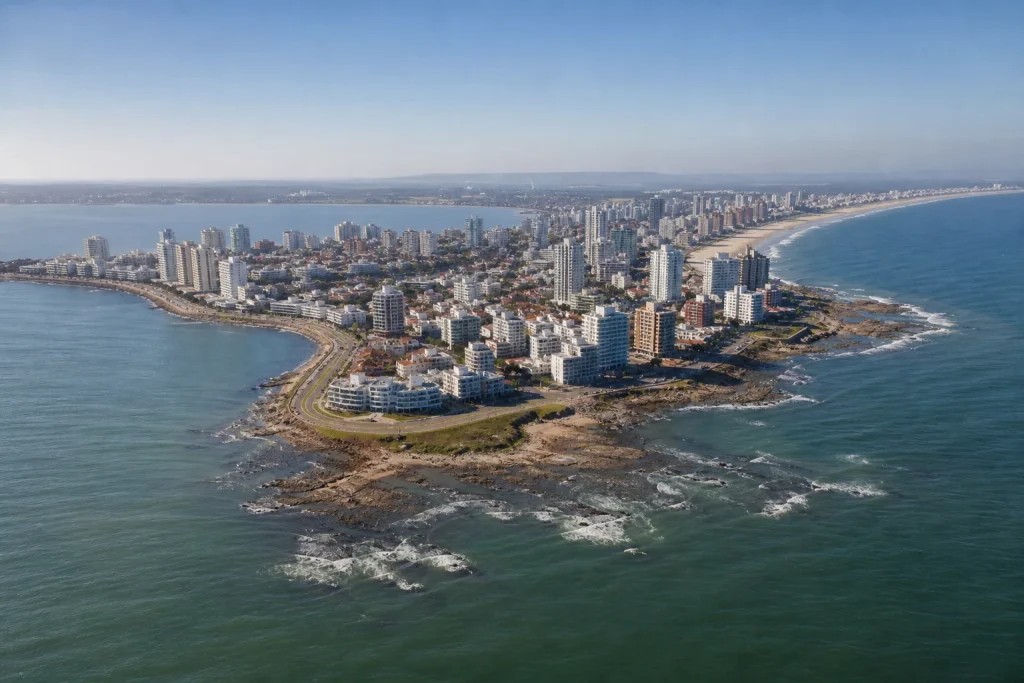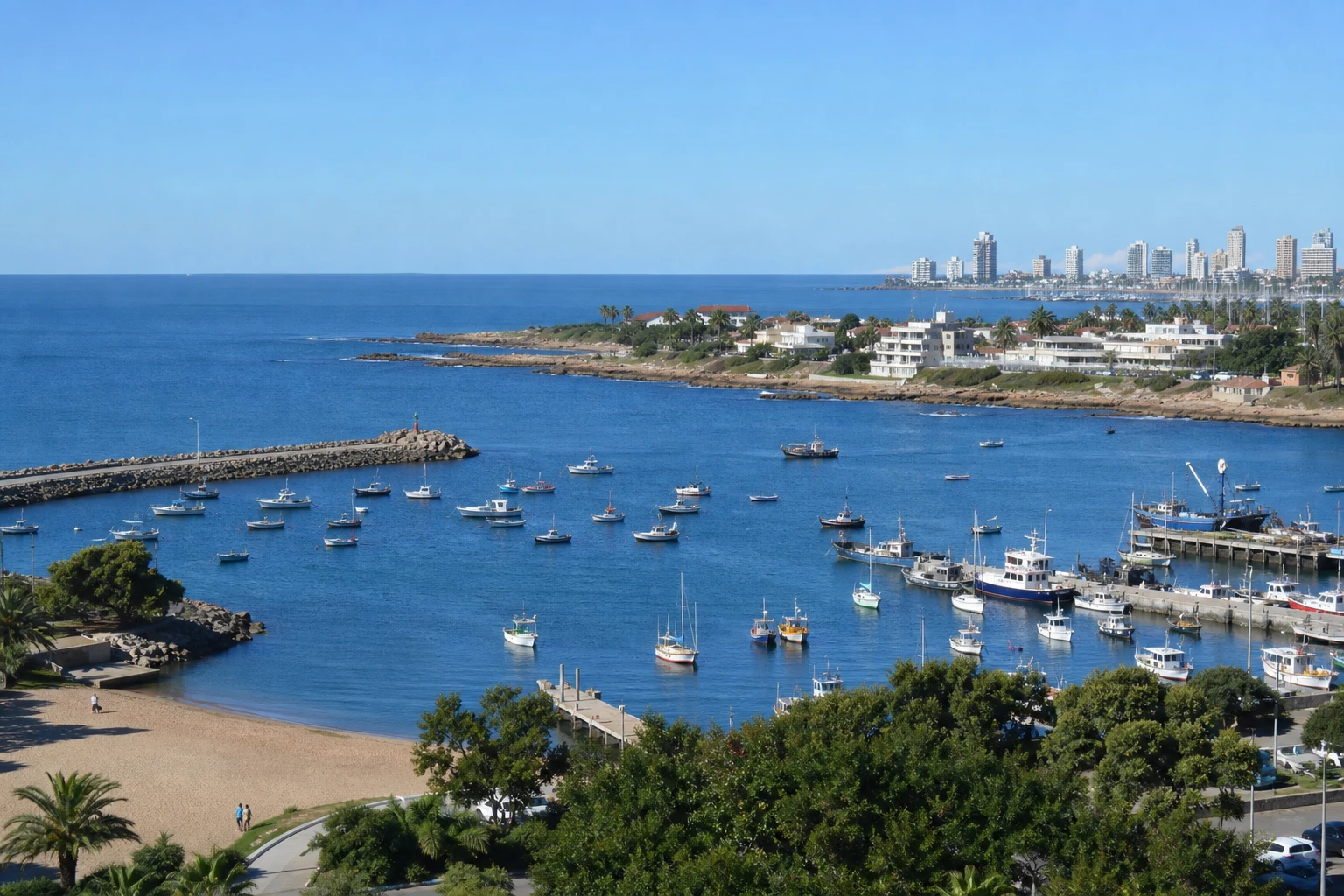
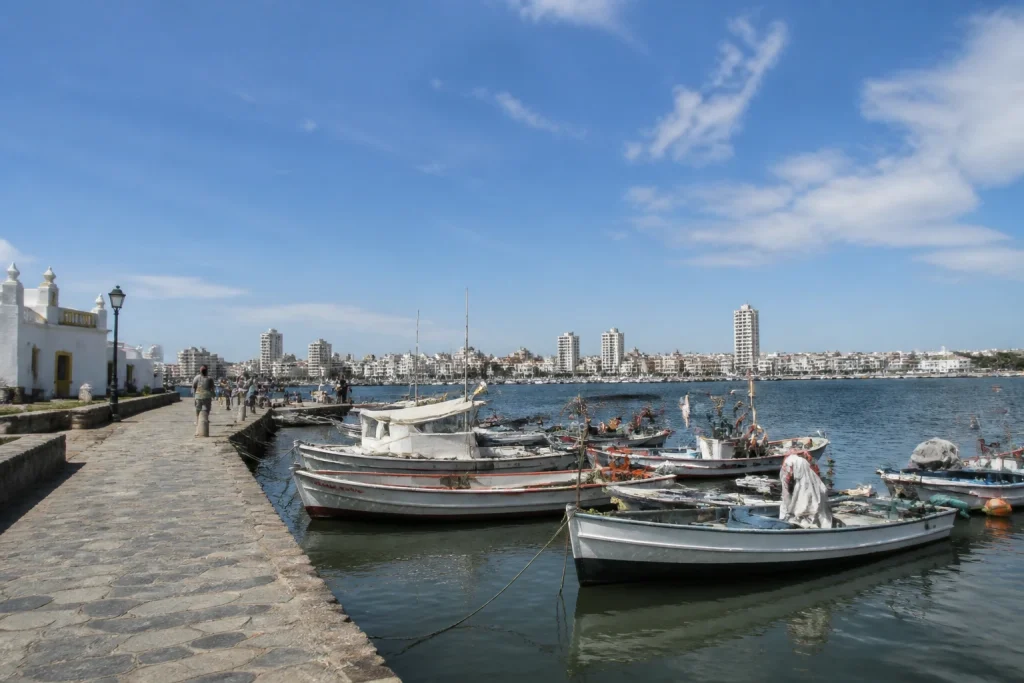
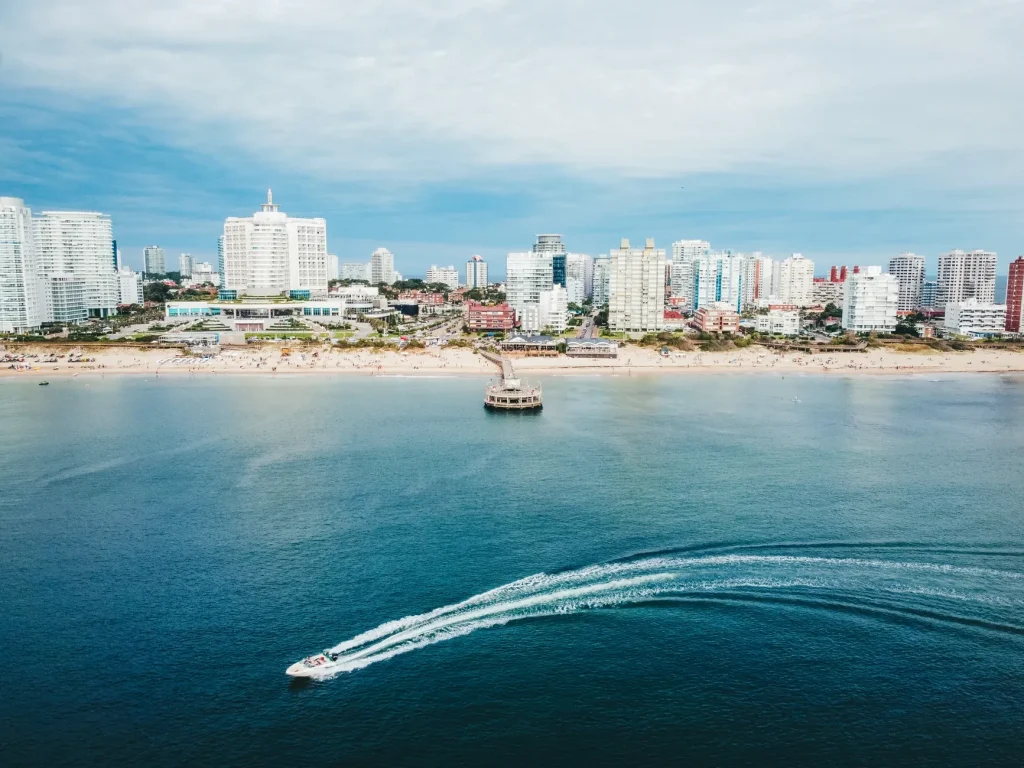
Punta del Este offers a distinctly maritime cruise arrival at Uruguay’s southeastern tip, where the Río de la Plata meets the Atlantic Ocean. The port sits on the peninsula and serves recreational, tourist, cruise, and artisanal-fishing activity. Its setting feels more like a central waterfront harbor than a remote commercial terminal, but the precise landing arrangements can vary by cruise call.
- Check your cruise line’s final instructions for the landing method, meeting point, and all-aboard time.
- Independent exploration can work well for a compact peninsula day, provided you keep a generous return buffer.
- Choose a ship excursion when predictable coordination, transportation, or mobility support is the priority.
- Do not assume that a shuttle, fixed taxi fare, luggage service, or accessible landing facility will be available.
- Treat controlled port areas as working spaces and follow crew or port directions at every stage.
What kind of cruise port is Punta del Este?
This is a waterfront port on the Punta del Este peninsula, not an isolated container complex beyond the resort area. Recreational craft, tourist vessels, cruise activity, and an artisanal-fishing sector share the broader port environment. That combination gives the arrival a working maritime character while placing visitors near the peninsula rather than on a distant industrial fringe.

Punta del Este Shore Tour for Cruise Passengers
Join us on a tour to discover Punta del Este, one of Latin America’s most exclusive destinations. With its elegant neighborhoods, coastal lifestyle...

Wine Lovers - Bodega Garzon Experience
Get ready to be wowed by Bodega Garzon, which has been named the Best Winery in the Southern Hemisphere! We at The W...

Punta del Este Shore Excursion: Private Sightseeing Tour of Punta del Este
Explore the sophisticated resort town of Punta del Este on this 4-hour private shore excursion. With a private guide...

Private & Exclusive - Punta del Este for Cruise Passengers
Unlike shared tours, this private experience is designed entirely around your interests and pace with a local and fr...
The central location is the port’s main advantage for visitors who prefer to set their own pace. It can support a compact day centered on the peninsula, especially when the ship’s schedule allows ample time ashore. Central, however, does not mean unrestricted. Piers, berths, marinas, and other port spaces can be controlled for operational or security reasons.
Think of the harbor as your arrival gateway rather than a sightseeing attraction with guaranteed public access throughout. Fishing and boating operations continue around the waterfront, so watch for instructions, barriers, and changing pickup arrangements. The safest plan begins with the location assigned for your specific ship rather than a meeting point remembered from a previous visit.
What to expect when your ship arrives
Do not assume that every cruise call uses the same landing method. Current public port information does not establish a universal arrangement for ships to berth alongside or transfer passengers by tender. Your cruise line’s final instructions should identify how passengers will go ashore, where tours assemble, and when everyone must be back aboard.
This distinction matters because a tender operation can add boarding stages and make the timing less flexible. Travelers using wheelchairs, scooters, walkers, or other mobility devices should confirm the landing procedure before committing to independent plans. The port’s general infrastructure description does not guarantee an accessible transfer for every cruise call.
- Read the ship’s final port notice before leaving your cabin.
- Confirm the landing method and the designated point for returning passengers.
- Note the ship’s all-aboard time rather than planning around the advertised departure time.
- Ask how mobility devices will be handled if assistance is required.
- Keep enough unscheduled time to accommodate security controls and changes around the port.
Avoid building a tightly timed first activity around an assumed arrival process. A flexible opening hour lets you absorb disembarkation, port directions, and any transportation coordination without sacrificing the rest of the day. Once ashore, confirm where you need to return before walking away from the controlled area.
Choosing between independent exploration and a shore excursion
The decision comes down to flexibility versus logistical certainty. Independent exploration suits travelers comfortable checking conditions after arrival and protecting a substantial return buffer. A ship-organized excursion offers clearer transportation and return coordination, which can be valuable when the landing setup, pickup point, or mobility arrangements are central concerns.
| Approach | Best suited to | Main consideration |
|---|---|---|
| Independent peninsula visit | Travelers who want a flexible, compact day | Confirm the landing point, local transport conditions, and return route before setting out. |
| Ship-organized excursion | Visitors who value coordinated transport and return planning | The schedule is less flexible, and the cruise operator sets the price and inclusions. |
| Privately arranged tour | Small groups with a specific itinerary | Confirm the meeting point, pickup timing, and return margin for your cruise call. |
| Mobility-focused plan | Travelers who need accessible transfers or vehicles | Verify the landing method and assistance arrangements before booking. |
A first visit does not need an ambitious route. Start by choosing one priority, then add a second only if the day is running smoothly. The site’s guide to the best things to do in Punta del Este for first-time visitors can help narrow the possibilities without turning a short port call into a race.
If the ship’s plan leaves little room for delays, the organized option is usually easier to manage. Travelers with a longer call and uncomplicated mobility needs have more freedom to explore independently. In either case, keep the final portion of the visit simple and close enough to the assigned return point to avoid a stressful finish.

Private Have It Your Way Tour in Punta Del Este
Be prepared for an exclusive trip through Punta del Este with a true local! We will share our knowledge in an engag...
Punta del Este Shore Excursion: Private Sightseeing Tour of Punta del Este
Explore the sophisticated resort town of Punta del Este on this 4-hour private shore excursion. With a private guide...
Private & Exclusive - Punta del Este for Cruise Passengers
Unlike shared tours, this private experience is designed entirely around your interests and pace with a local and fr...
Building a compact peninsula itinerary
A peninsula-focused plan makes the most of the port’s central setting while limiting the number of moving parts. Begin only after confirming the day’s return point. Then choose a manageable combination of waterfront scenery, streets, a meal, and one additional priority. Leave optional stops for the return leg rather than committing to them at the start.
Travelers interested in a self-guided route can use the walking guide to the peninsula, lighthouse, marina, and Gorlero as a planning companion. Adapt the route to the ship’s schedule instead of trying to complete every segment. Port controls or an altered return point can affect the most convenient direction on the day.
Beach time requires another choice. The comparison of Playa Brava and Playa Mansa is useful for selecting which beach better fits your day before committing to transport or a long detour. Check the available time and same-day conditions first, then preserve enough margin to return without relying on a last-minute ride.
Food can serve as the day’s flexible centerpiece because it does not require a long sightseeing circuit. The coastal food guide to chivito, parrilla, seafood, and wine offers ideas for what to look for. On a cruise stop, choose the location only after you understand the return route, and keep service time in mind before ordering an elaborate meal.
- One primary sight or activity
- A waterfront or peninsula walk that can be shortened
- A meal or snack with enough time for service
- An optional stop reserved for the return journey
- A firm turnaround point based on the ship’s instructions
Getting around without making risky assumptions
The peninsula location makes a walking-based visit potentially attractive, but the exact cruise landing position and passenger exit route must be checked for your call. Do not plan from a generic map marker alone. First identify where passengers emerge, where they must return, and whether any controlled port space separates that point from the surrounding area.
If you need a taxi, private vehicle, or other local transport, establish the price and return arrangement on the day. There is no standard traveler-facing port fare that should be assumed for every cruise call. A pickup location can also change when the port administration controls access to piers, marinas, or adjacent operating spaces.
Do not count on a complimentary shuttle unless your cruise line specifically lists one. The same applies to luggage storage and terminal-style passenger services. A small day bag is easier to manage than belongings that depend on facilities not included in the ship’s final instructions.
For plans beyond the peninsula, transport certainty becomes more important. Confirm both directions before leaving the port area and avoid an itinerary that depends on finding an immediate ride back. If those details remain unclear after arrival, reduce the route or choose an excursion with coordinated transportation.
Costs, fares, and booking decisions
Plan for variable costs rather than a universal Punta del Este cruise-port price. Cruise-line transfers and shore excursions are priced by the operator, with inclusions tied to the selected product. Independently arranged transportation should be priced locally for the day of the call instead of estimated from old port tariffs or historical infrastructure charges.
Compare more than the headline price when choosing an excursion. The meeting arrangement, transportation, planned duration, return coordination, and mobility provisions can matter more than an extra stop. Review the booking confirmation once, paying particular attention to where the group meets and how the return to the ship is handled.
Independent travelers can keep spending flexible by selecting a compact route and deciding on transportation only after seeing the arrival setup. Carry a payment method suitable for the purchases you plan to make, but avoid depending on a particular terminal service or fixed local fare unless the cruise line has confirmed it for the call.
Still comparing Punta Del Este Cruise Port Shore Excursions?
Ask for tour ideas, hotel suggestions, or a simple trip plan that combines both.
Trip Helper
Accessibility requires advance confirmation
Travelers using mobility devices should contact the cruise line before booking shore plans. Do not assume step-free landing, wheelchair-compatible tendering, accessible restrooms, tactile wayfinding, or accessible vehicles at the arrival point. General descriptions of port infrastructure do not confirm those passenger facilities for a specific cruise call.
Ask first about the transfer between ship and shore. Then confirm the route through the controlled port area, the excursion vehicle, and the meeting point. A tour described as accessible on land can still be unsuitable if the cruise landing stage cannot accommodate the traveler or mobility device.
A ship excursion can simplify coordination, but accessibility still depends on the actual landing procedure and selected vehicle. Keep assistance needs attached to the booking and review the final port notice for changes. If a companion provides support, include that person when discussing transfers and boarding procedures.
Port security and returning to the ship
Punta del Este’s port operates within the International Ship and Port Facility Security Code framework. Port administrators can control berths, piers, marinas, and other spaces when operations require it. For passengers, the practical lesson is simple: follow marked routes and staff directions instead of assuming that yesterday’s pickup area or a public-looking pier remains accessible.
Save the return point in a form you can consult without relying on a signal, and carry the documents specified by the ship. Before leaving the immediate area, identify any gate, checkpoint, or transfer stage that must be repeated on the way back. These small checks reduce confusion when several boats, vehicles, and tour groups are moving at once.
Set a personal turnaround time earlier than the ship’s stated deadline. Independent plans should include a generous margin for transportation, security controls, and the actual transfer back aboard. If delays begin to consume that margin, remove the final stop rather than trying to recover time with an uncertain ride.
What to carry ashore
Pack for a flexible day rather than a formal terminal experience. A small bag, comfortable walking shoes, sun protection, water, and a light outer layer cover the basic needs of an outdoor waterfront visit. Bring the ship card and identification specified in your cruise instructions, plus any medication or mobility equipment required during the call.
- Ship card and the identification named in the port notice
- Screenshot or paper copy of the return point and all-aboard time
- Comfortable footwear for an adjustable walking route
- Sun protection, water, and a light layer
- Necessary medication and mobility accessories
- A compact payment setup for planned purchases
Leave bulky items aboard unless they are essential. Public luggage arrangements are not part of the arrival information travelers should assume. A lighter bag is also easier to manage if boarding involves steps, a tender, or movement through a busy controlled area, although the actual transfer method must be confirmed for the call.
Do not confuse port tariff seasons with visitor seasons
An official port regulation uses March 1 through December 15 as a low-season period for certain tariffs. That administrative label does not describe cruise frequency, weather, crowds, or business opening patterns. It should not be used by itself to decide what your day ashore will feel like.
Use the ship’s call information for operational details and a dedicated guide to Punta del Este’s summer season and off-season for broader trip planning. On the day, allow the actual weather, available time, and landing process to shape the route. An adaptable plan is more useful than one built around an administrative season label.

Punta del Este Classic City Tour with Sunset at Casapueblo
This tour is the best way to get to know Punta del Este in depth. If it's your first time in Punta, we recommend tak...

Discover Punta del Este: Private City Tour with a Local Guide
Discover Punta del Este in comfort with a private experience designed to let you enjoy the destination at your own p...

Private Tour in Punta del Este
You will live the Punta del Este experience on an exciting guided tour with personalized service where you will disc...
Three practical ways to structure the day
A compact independent visit
Confirm the landing and return points, then stay focused on the peninsula. Choose one main interest, add a flexible waterfront walk, and schedule food before the final return window. This approach suits travelers who value control over pace and are comfortable changing the route when port or transportation conditions require it.
A coordinated sightseeing day
Select a ship excursion or prearranged tour with clearly stated transport and meeting details. This structure works best when you want to travel beyond the immediate port area or reduce uncertainty about the return. Check the selected tour’s inclusions and mobility provisions rather than assuming every option follows the same route.
A low-pressure waterfront day
Keep the plan close to the arrival area and make the maritime setting the focus. Allow time for the waterfront, a meal, and an unhurried return through the required port controls. This is the most forgiving structure when the call is short, arrival takes longer than expected, or you simply prefer fewer transport decisions.
Making the most of a Punta del Este cruise call
Punta del Este rewards a measured plan. Its peninsula port creates appealing possibilities for an independently paced waterfront visit, while organized excursions provide firmer coordination when transport, timing, or accessibility matters most. The main limitation is that landing procedures and passenger arrangements should not be assumed across every call.
Choose one clear priority, read the final ship instructions, and leave a generous return margin. That simple framework gives the day room to unfold without letting small logistical changes take control of it. Punta del Este’s maritime setting can then remain the memorable part of the visit, rather than the clock.
Frequently asked questions
Where is the Punta del Este cruise port?
The port is on the Punta del Este peninsula at Uruguay’s southeastern tip, where the Río de la Plata meets the Atlantic Ocean. It handles recreational, tourist, cruise, and artisanal-fishing activity, creating a central waterfront arrival rather than an isolated commercial-terminal experience.
Do cruise ships dock or tender in Punta del Este?
Do not assume one landing method for every call. Current public port information does not establish a universal alongside-berth or tender arrangement. Check your cruise line’s final port instructions for the transfer method, passenger meeting point, and return procedure assigned to your ship.
Can I explore Punta del Este independently from the cruise port?
Yes, independent exploration can be a practical choice for travelers prepared to confirm the day’s landing point and local conditions. The peninsula setting favors a compact itinerary, but you should keep a generous return buffer and avoid relying on last-minute transportation.
Are taxis or port shuttles available?
Do not assume a shuttle or fixed local fare unless your cruise line confirms it for the call. If you use a taxi, private vehicle, or other independent transport, establish the price and return arrangement locally before leaving the port area.
Is the Punta del Este cruise arrival wheelchair accessible?
Accessibility must be confirmed with the cruise line for the specific call. Published port descriptions do not guarantee step-free landing, accessible tendering, suitable restrooms, tactile wayfinding, or accessible transportation. The ship-to-shore transfer should be checked before booking an excursion.
Should I book a ship excursion in Punta del Este?
A ship excursion is a good choice when coordinated transportation, return timing, or mobility support matters most. Independent exploration offers more flexibility and can suit a compact peninsula day, but it requires travelers to confirm same-day arrangements and preserve a larger return margin.
How early should I return to the ship?
Return before the cruise line’s stated all-aboard time and set an earlier personal turnaround point. Allow extra time for transportation, controlled port access, security instructions, and any ship-to-shore transfer stage. The cruise line’s final notice should guide your schedule.
Punta del Este Shore Tour for Cruise Passengers
Join us on a tour to discover Punta del Este, one of Latin America’s most exclusive destinations. With its elegant neighborhoods, coastal lifestyle...
Punta del Este Shore Excursion: Private Sightseeing Tour of Punta del Este
Explore the sophisticated resort town of Punta del Este on this 4-hour private shore excursion. With a private guide...
Private & Exclusive - Punta del Este for Cruise Passengers
Unlike shared tours, this private experience is designed entirely around your interests and pace with a local and fr...

Wine Lovers - Punta Wine Experience
Get ready for a Fun Adventure with The Wine Experience, the pioneers of wine tours in Uruguay! Whether you're a curi...
Punta del Este Shore Tour for Cruise Passengers
Join us on a tour to discover Punta del Este, one of Latin America’s most exclusive destinations. With its elegant neighborhoods, coastal lifestyle...
Punta del Este Shore Excursion: Private Sightseeing Tour of Punta del Este
Explore the sophisticated resort town of Punta del Este on this 4-hour private shore excursion. With a private guide...
Private & Exclusive - Punta del Este for Cruise Passengers
Unlike shared tours, this private experience is designed entirely around your interests and pace with a local and fr...
Punta del Este Classic City Tour with Sunset at Casapueblo
This tour is the best way to get to know Punta del Este in depth. If it's your first time in Punta, we recommend tak...