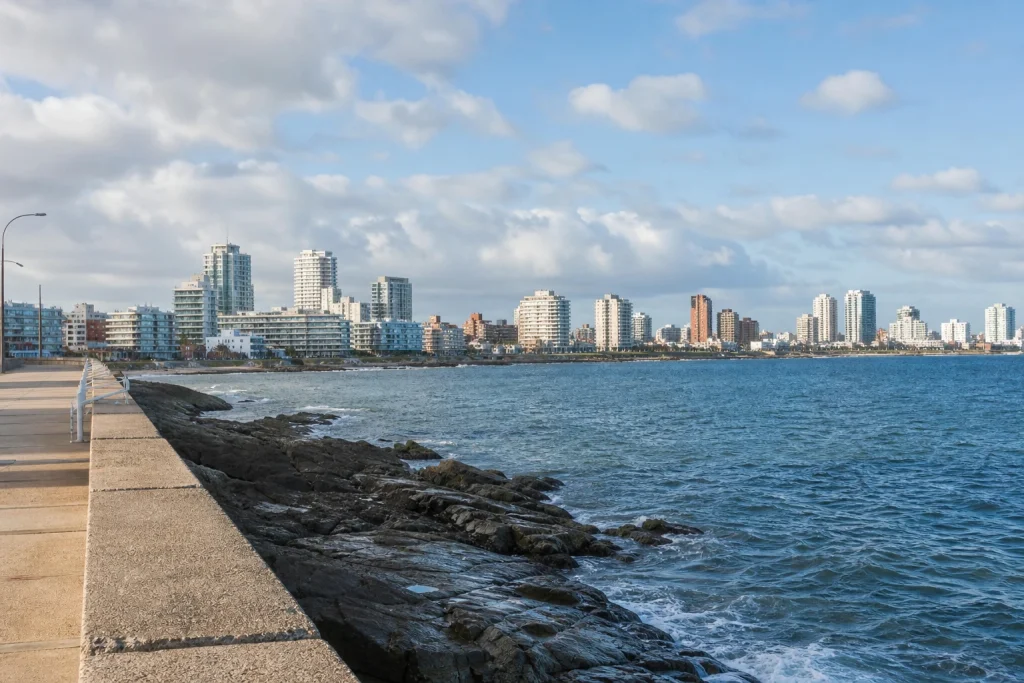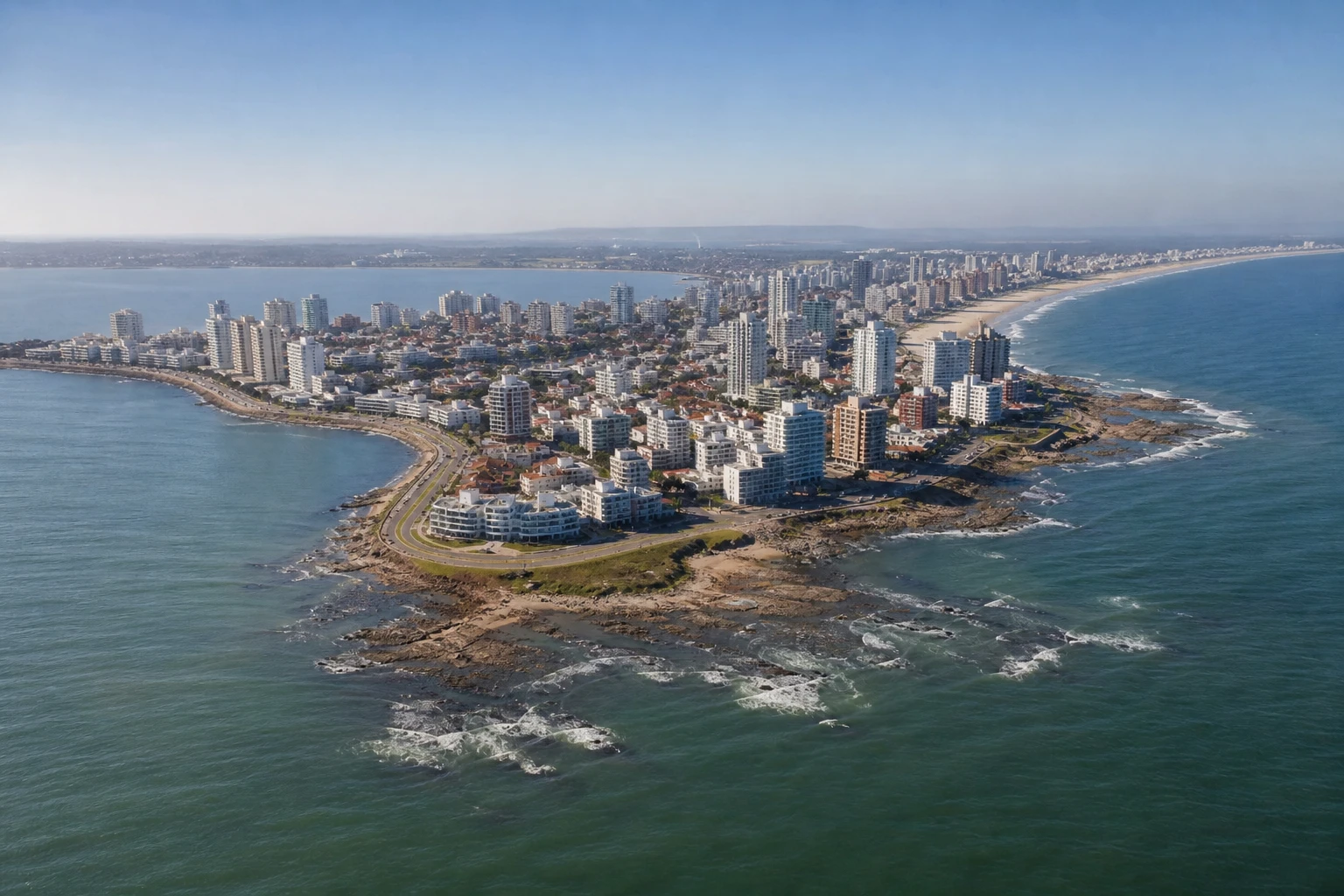
A first visit to Punta del Este starts with one useful fact: this is both a compact peninsula and a much broader stretch of coast. Playa Mansa faces the Río de la Plata side, Playa Brava faces the Atlantic, and the resort area continues west toward Punta Ballena and east toward La Barra and José Ignacio. Choose your base and daily plans with that geography in mind, and the destination becomes far easier to navigate.
- Use the peninsula as your orientation point, then decide whether you want to spend time west toward Punta Ballena or east toward La Barra and José Ignacio.
- Treat the roughly 1.5-hour journey from Montevideo as a planning estimate, not a timed promise.
- January and February bring major sporting events and strong demand, so reserve key arrangements earlier if visiting then.
- Confirm the actual terminal for any long-distance bus before choosing lodging or arranging an onward transfer.
- Let local weather, surf, and beach-flag conditions shape each beach day.
Arrive with a flexible transport plan
Montevideo is a practical starting point for many first-time visitors, with Punta del Este described as roughly 1.5 hours away. Give yourself breathing room around that estimate, especially when a hotel check-in, dinner reservation, or tour is involved. If you are flying, confirm your airline’s timing close to departure and check the airport’s live arrivals or departures rather than relying on a general schedule.

Punta del Este Classic City Tour with Sunset at Casapueblo
This tour is the best way to get to know Punta del Este in depth. If it's your first time in Punta, we recommend taking the City Classic to get a good...

Punta del Este Shore Excursion: Private Sightseeing Tour of Punta del Este
Explore the sophisticated resort town of Punta del Este on this 4-hour private shore excursion. With a private guide...

Private Tour in Punta del Este
You will live the Punta del Este experience on an exciting guided tour with personalized service where you will disc...

Jewish History Punta del Este Old Town Private Walking Tour
Uncover Punta del Este’s Jewish heritage as you explore synagogues, cultural landmarks, and hidden gems. Stroll th...
Long-distance bus travelers should verify the arrival terminal before booking the rest of the trip. Punta del Este’s terminal is not slated to close, but a mobility proposal could redirect some interdepartmental services to the Maldonado terminal. That difference matters when selecting accommodation, arranging a pickup, or planning an evening arrival.
A Colonia to Punta del Este coach route has been authorized, making it a connection worth checking if you are linking Uruguay’s historic southwest with the coast. Do not build a same-day plan around it until you have confirmed the current operator timetable, ticket availability, and arrival point.
| Arrival option | What to confirm before you commit |
|---|---|
| Starting in Montevideo | Use roughly 1.5 hours as a broad travel estimate and leave room for traffic and your exact departure point. |
| Flying to Punta del Este | Recheck airline times and the airport’s live board close to travel. |
| Long-distance bus | Confirm whether your service arrives at the Punta del Este terminal or Terminal Maldonado. |
| Coming from Colonia | Check whether the authorized route is operating on your date and where it terminates. |
Choose your base before you choose your hotel
Punta del Este rewards travelers who match their lodging area to their priorities. The peninsula places you in the destination’s compact core, while the larger coastal area spreads in two directions. A room that looks close on a regional map can still put your preferred beach or dinner plans in a different part of the coast.
Stay around the peninsula if being near the meeting point of Playa Mansa and Playa Brava is your main goal. It is the simplest choice for a first visit focused on understanding the place, fitting beach time around meals, and keeping your first few days geographically straightforward.
Look west toward Punta Ballena or east toward La Barra and José Ignacio when those areas are central to your trip rather than occasional excursions. This approach works especially well for travelers who prefer to settle into one stretch of coast instead of repeatedly crossing the wider resort area.
Before reserving, write down the two or three places you expect to return to most often, then choose lodging accordingly. Our Where To Stay in Punta del Este guide can help frame that decision, but the best base is the one that suits your own balance of peninsula time, beach days, and coastal exploring.
Use Playa Mansa and Playa Brava as your compass
The two signature beaches provide Punta del Este’s clearest sense of direction. Playa Mansa is on the Río de la Plata side of the peninsula, while Playa Brava faces the Atlantic. Learning those names early makes maps, meeting points, and hotel descriptions much easier to understand.

Do not treat either beach name as a promise of identical conditions every day. Check local weather, surf, and flag conditions when you arrive, then make the call that day. This is the sensible habit for swimming, long walks by the water, and any beach-based activity.
Keep your first beach outing simple: bring water, sun protection, a light layer for changing conditions, and only what you are comfortable carrying. If choosing between the two beaches is your main question, use our Playa Brava vs Playa Mansa beach comparison to match the day’s conditions and your preferred setting to the right side of the peninsula.

Private Have It Your Way Tour in Punta Del Este
Be prepared for an exclusive trip through Punta del Este with a true local! We will share our knowledge in an engag...

Discover Punta del Este: Private City Tour with a Local Guide
Discover Punta del Este in comfort with a private experience designed to let you enjoy the destination at your own p...

Five Course Tasting Menu
Our vineyards sit on Pueblo Eden’s rocky mountains slopes. The mineral character of our soils and it’s oceanic i...
Pick dates for the atmosphere you want
January and February are the liveliest months for a beach-focused visit, with major sporting events listed during that period. The tradeoff is straightforward: accommodation, restaurant, and transport demand rises with the summer energy. If these months are your target, make the biggest decisions, especially where to stay, before filling in smaller details.
Outside the peak summer period, Punta del Este remains a year-round destination with attractions and programming. This timing suits travelers who do not need the fullest beach-season atmosphere and would rather build a trip around the coast, local walks, and a more measured pace.
- Choose January or February for peak beach-season energy and plan ahead.
- Choose dates outside peak season if lower demand matters more than a packed summer calendar.
- Check dates for events that matter to you before committing to nonrefundable arrangements.
- Read our guide to Punta del Este’s summer season versus the off-season if timing is the deciding factor in your trip.
Set a realistic budget without relying on stale price lists
Punta del Este is positioned as an upscale coastal destination, known for luxury homes, yachts, higher-end hotels, restaurants, nightlife, and glamour. Peak-season costs can be high, so it pays to set a spending limit before you begin browsing. Avoid planning around old online price ranges, since lodging, transport, and dining costs change by date and demand.
- Set aside the largest share of your budget for accommodation before adding extras.
- Separate planned meals, local transport, and activities into their own spending categories.
- Keep a small contingency for a changed transport plan or a weather-driven switch in activities.
- Compare current booking options for your actual dates rather than using a generic daily-cost estimate.
A clear budget also gives you permission to enjoy the places you choose rather than constantly recalculating the trip. If food is a priority, our eating along the coast guide to chivito, parrilla, seafood, and wine is a useful starting point for deciding which meals deserve room in the plan.
Build your first days around one area at a time
The best first-day strategy is orientation, not a checklist. Let the peninsula show you how Playa Mansa, Playa Brava, and the central streets relate to each other. Once that layout feels familiar, deciding where to eat, walk, or spend beach time takes far less effort.
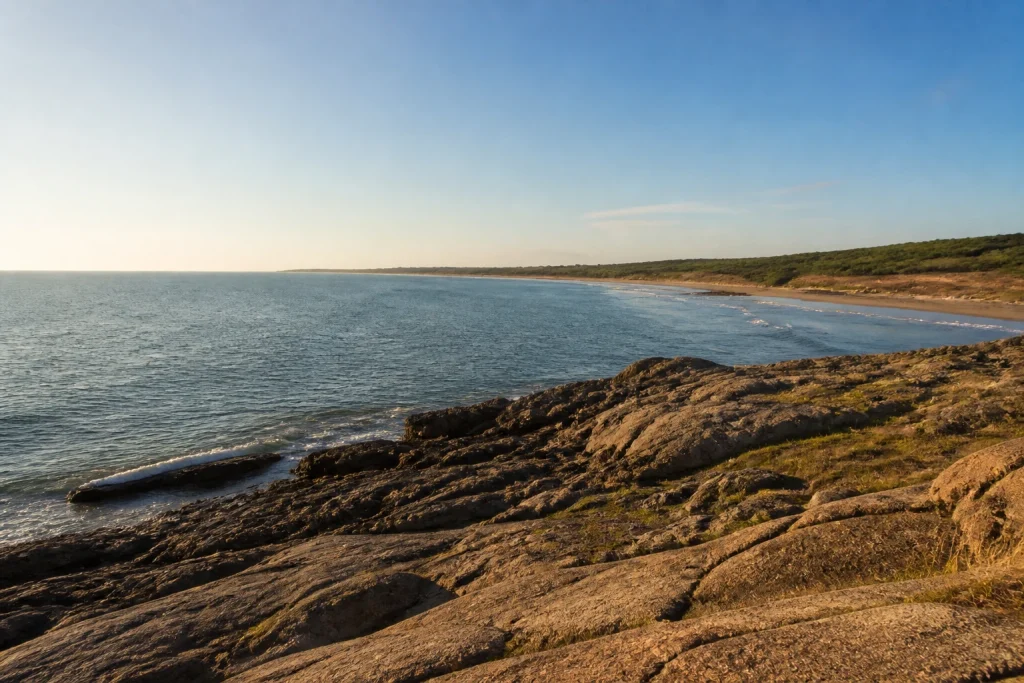
A simple first-timer framework
- Use your arrival day to locate your beach side, lodging area, and nearest practical meeting points.
- Give one day to the peninsula and a beach that suits the conditions, rather than trying to cover both ends of the resort area.
- Choose either a westward outing toward Punta Ballena or an eastward outing toward La Barra and José Ignacio for another day.
- Leave one part of the schedule open for weather, a favorite beach, or an area you want to revisit.
Avoid turning a coastal holiday into a race across the map. Punta Ballena lies west of the resort area, while La Barra and José Ignacio lie east, so each direction deserves its own attention. For an eastward extension, our Slow Coastal Day in José Ignacio guide offers a useful prompt to slow down rather than treating the coast as a series of quick stops.
A self-guided walk is also an easy way to find your bearings. If the peninsula’s lighthouse, marina, and Gorlero are on your list, use our walking guide to the peninsula’s lighthouse, marina, and Gorlero to give that first exploration a clear shape without overloading the day.
Still comparing Punta Del Este First Time Travel Planning And City Orientation?
Ask for tour ideas, hotel suggestions, or a simple trip plan that combines both.
Trip Helper
Plan accessibility details before arrival
Punta del Este has several public-realm features that can support a lower-barrier itinerary. These include ramps and level pedestrian routes around La Mano, a podotactile path and ramps at Paseo de las Américas, and accessible features at Plaza de los Artesanos and Parque El Jagüel. These places make strong starting points when accessibility is central to the trip.
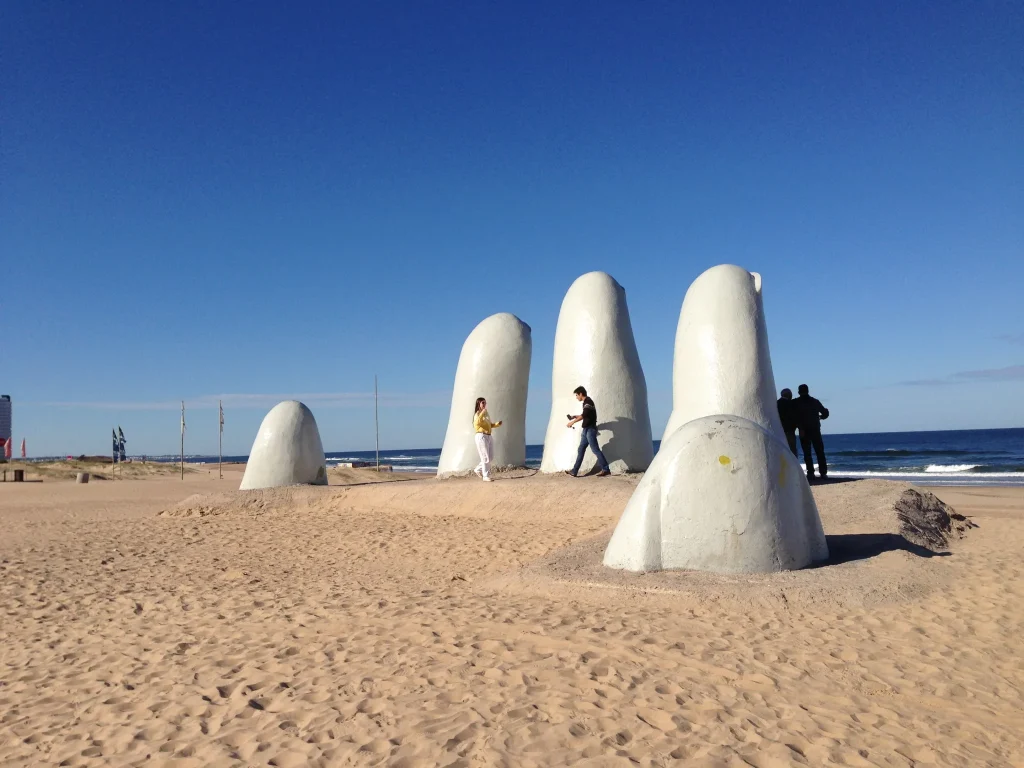
For a beach day, Playa Mansa at Parada 8 is the local accessible-beach site, with a summer program that has included beach wheelchairs, accessible walkways, reserved parking, and trained assistance. Confirm the operating dates, daily hours, equipment, parking, restroom access, and the specific entrance before relying on the service.
Check local updates at the right moment
A Ministry of Tourism information point at Gorlero and Calle 29 lists personalized service Tuesday through Saturday from 9:00 to 17:00. It is a useful in-destination stop if you need practical orientation, but confirm hours before making a special trip, particularly around holidays or outside the busiest season.
Use the final days before departure for the details most likely to change: flight times, bus routing, beach conditions, weather, and any seasonal accessibility service. A few short checks close to travel protect the rest of your plan without turning the trip into a spreadsheet exercise.
Make your first Punta del Este trip feel manageable
Punta del Este suits first-time visitors who plan around its real shape: a memorable peninsula, two defining beaches, and a coast that reaches in both directions. Start by selecting the right base, keep transport and beach plans flexible, and decide which side trips genuinely fit your time. For more inspiration once the essentials are set, see Best Things to Do in Punta del Este for First-Time Visitors and build out the parts that interest you most.
Frequently asked questions
Is Punta del Este a good destination for first-time visitors?
Yes. It is easier to approach when you use the peninsula as your starting point, understand the difference between Playa Mansa and Playa Brava, and choose only one coastal direction for a day trip at a time.
How long does it take to get to Punta del Este from Montevideo?
Allow roughly 1.5 hours as a broad planning estimate from Montevideo. Traffic and your exact starting point can materially change the journey, so avoid scheduling an important commitment too tightly after arrival.
When is the best time to visit Punta del Este?
January and February are best for travelers seeking the liveliest beach-season atmosphere and major sporting events. Travel outside that peak period if you prefer lower demand and do not need the fullest summer scene.
Which beach should I visit first, Playa Mansa or Playa Brava?
Start by using the beaches as geographic reference points: Playa Mansa faces the Río de la Plata and Playa Brava faces the Atlantic. Check local weather, surf, and flag conditions on the day before choosing where to swim or spend the afternoon.
Is Punta del Este accessible for travelers with mobility or sensory needs?
Several public areas have accessibility features, including routes around La Mano, Paseo de las Américas, Plaza de los Artesanos, and Parque El Jagüel. Playa Mansa at Parada 8 also has a seasonal accessible-beach program, so confirm the specific services needed for your dates.
Punta del Este Classic City Tour with Sunset at Casapueblo
This tour is the best way to get to know Punta del Este in depth. If it's your first time in Punta, we recommend taking the City Classic to get a good...
Punta del Este Shore Excursion: Private Sightseeing Tour of Punta del Este
Explore the sophisticated resort town of Punta del Este on this 4-hour private shore excursion. With a private guide...