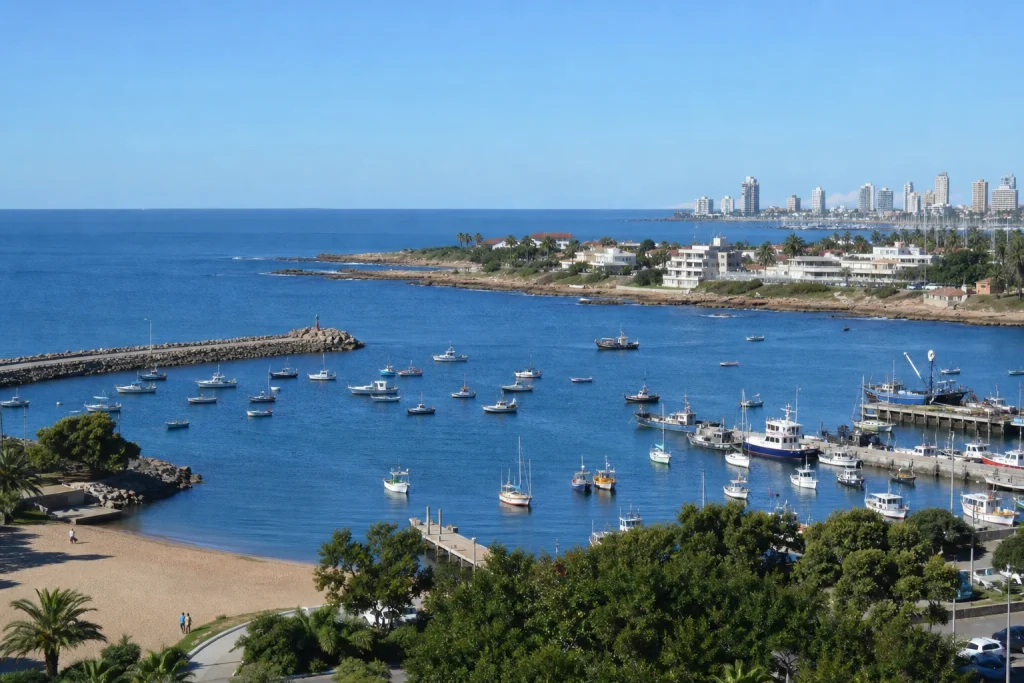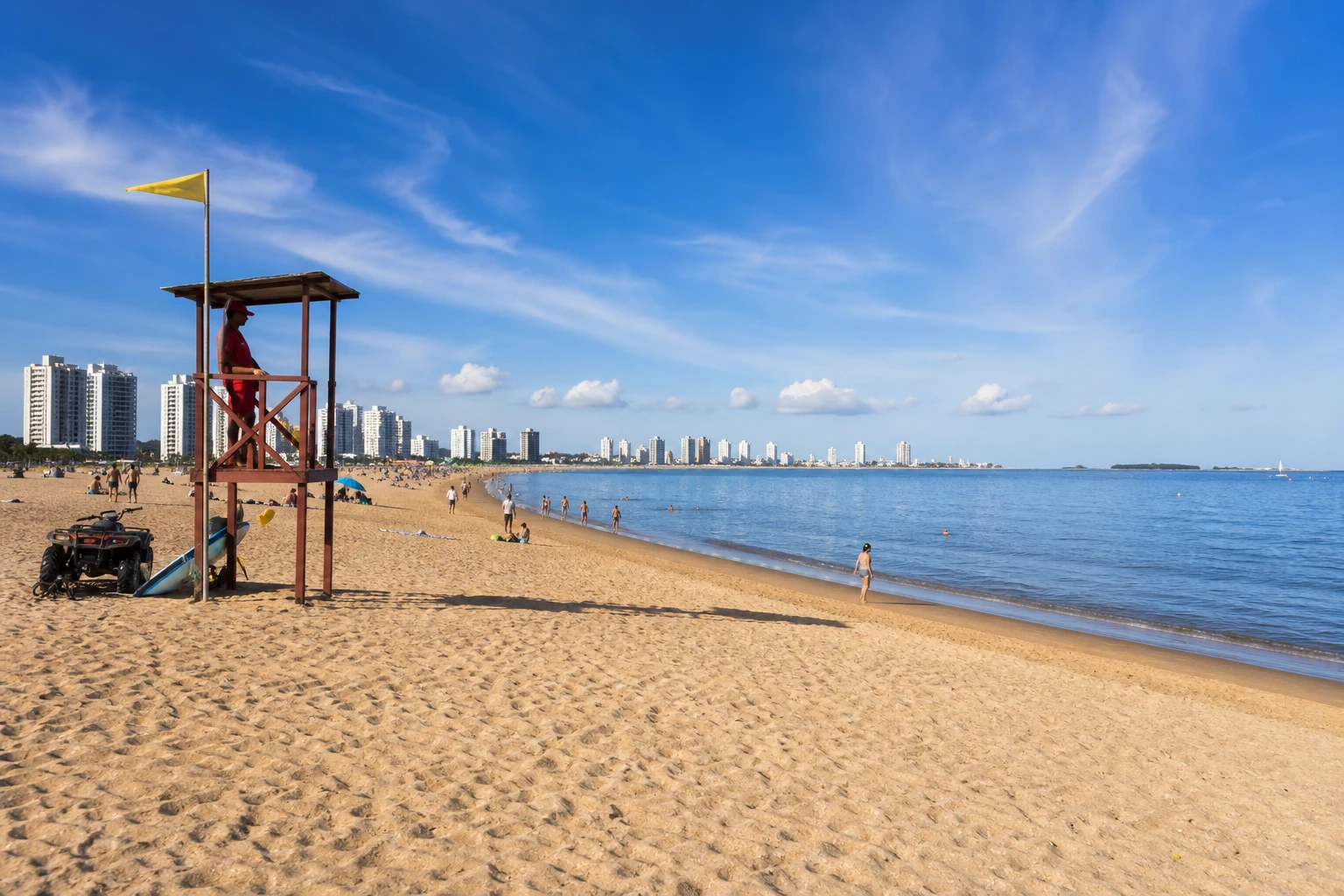
A Punta del Este beach day starts with one simple decision: choose the place to swim for its safety setup, not scenery alone. Look for a lifeguard tower, read the flags at the sand, and let the lifeguard’s direction settle the question of whether to enter the water. Conditions, including water quality and weather-related hazards, can change suddenly, so the on-site flags are the decision that matters on the day of your visit.
The safest swimming choice starts with a lifeguard tower
Uruguay’s beach-safety guidance treats a beach area marked by a lifeguard tower as an authorized bathing area. That makes a tower the practical first filter for swimmers, especially families and anyone who is not fully confident in open water. Strong swimming ability does not remove beach risk, so choose the supervised section and follow the instructions given there.

Garzón Winery Full Day with Lunch and Transportation Included
The experience begins at the indicated time with departure from Enjoy Punta del Este (ex Conrad), located at Stop 4 of Playa Mansa, meeting point to s...

Wine Lovers - Bodega Garzon Experience
Get ready to be wowed by Bodega Garzon, which has been named the Best Winery in the Southern Hemisphere! We at The W...

Private Photo Session with a Local Photographer in Punta del Este
Want to capture your amazing honeymoon? Family vacation while the kids are still little? Your perfect couples retrea...

Punta del Este Shore Excursion: Private Sightseeing Tour of Punta del Este
Explore the sophisticated resort town of Punta del Este on this 4-hour private shore excursion. With a private guide...
- Swim in a beach section marked by a lifeguard tower rather than selecting a stretch for looks or space alone.
- Check the flags at the beach before entering the water, even if conditions looked favorable earlier.
- Treat a red pennant at the shoreline as a rip-current warning and stay out of that area.
- Keep children within arm’s reach at the water’s edge, including children who can swim.
- Leave inflatables ashore when wind blows from land toward the sea, and never chase one that drifts away.
A less-crowded or unstaffed stretch can be appealing for sunbathing or a walk, but it does not offer the safety basis recommended for swimming. If the plan includes getting in the water, move to an authorized, lifeguard-towered area. This is a small adjustment that gives the beach day a much better margin for changing conditions.
Read the beach flags before you enter the water
Flags are direct operating instructions, not background decoration. Take a moment to locate them before laying out towels or unpacking a bag. A lifeguard can clarify what a flag means locally, but the basic system gives every visitor a quick way to understand whether bathing is enabled, restricted, or unsafe.
| Beach signal | What it means | What to do |
|---|---|---|
| Green flag | Bathing is enabled. | Continue to stay aware and follow lifeguard directions. |
| Yellow flag | Caution is required. | Assess conditions carefully and follow the lifeguard’s advice. |
| Red flag | Bathing is not enabled. | Do not enter the water. |
| Black flag with lightning | An electrical storm is present. | Leave the beach. |
| Red pennant at the shoreline | Rip-current danger. | Do not swim in that area. |
| Sanitary flag | There is a potential health risk. | Do not bathe; ask the lifeguard if you need clarification. |
Use a five-minute arrival routine
- Find the lifeguard tower and make sure your intended swimming area is within its supervised section.
- Read the flag or flags before anyone enters the water.
- Look for a red pennant along the shoreline, which marks rip-current danger.
- Ask the lifeguard about the best place to enter if the sea or flag display is unclear.
- Repeat the check after a long lunch, a change in wind, or a sudden shift in weather.
Do not rely on a flag color remembered from another beach day or a condition checked online before leaving your hotel. The Ministry of Environment notes that environmental events can change suddenly and may not show up immediately on an online map. At the beach, the posted flag and the lifeguard’s direction are the practical final check.
Know how to respond to currents, wind and drifting gear
A red pennant at the shoreline signals rip-current danger. If a current begins pulling you away from shore, the priority is to stay calm and avoid trying to overpower it by swimming straight against the flow. A controlled response preserves energy and makes it easier for the lifeguard to spot and assist you.
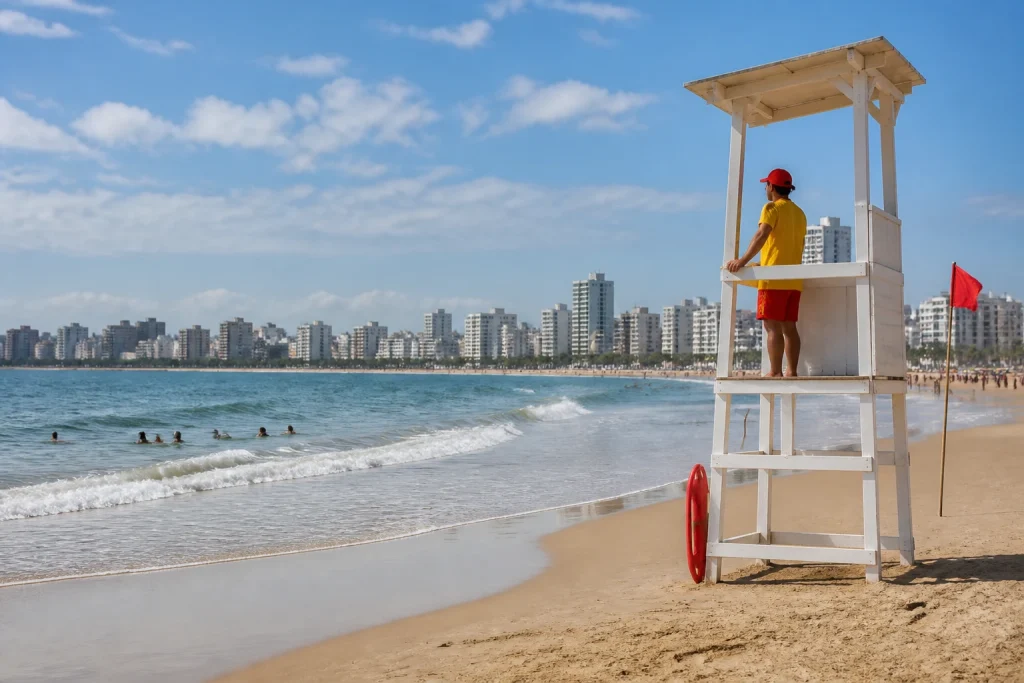
If a current pulls you away from shore
- Stay calm and do not swim against the current.
- Move parallel to the shore if you can do so safely.
- If you cannot move parallel, float instead of fighting the water.
- Raise one arm to signal for help.
Inflatables deserve the same respect as changing water conditions. Do not use them when wind is blowing from land toward the sea, since the wind can carry them outward. If one drifts away, leave it. Chasing a floating toy or mattress can pull a swimmer into a situation that requires help.
For children, close supervision is the rule that matters most. Keep them within arm’s reach of the supervising adult, including capable young swimmers. A lifeguard tower adds an important layer of protection, but it does not replace the adult who is responsible for the child in the water.
Treat sanitary flags as a stop sign for swimming
A sanitary flag means there is a potential health risk and bathing should stop. These alerts can relate to cyanobacterial blooms, elevated fecal-indicator bacteria, or other environmental events. The right response is straightforward: stay out of the water and ask the lifeguard if you need help understanding the conditions or choosing another supervised area.
Check the Ministry of Environment’s beach information before heading out if water quality, cyanobacteria, or jellyfish are a concern for your group. Then check again on arrival. That two-step habit is useful because beach conditions are variable, while the flag at the sand is the active instruction for that specific place and moment.
Still comparing Beach Safety?
Ask for tour ideas, hotel suggestions, or a simple trip plan that combines both.
Trip Helper
Choose the beach section for swimming, not only for atmosphere
A good Punta del Este beach plan separates the choice of where to relax from the choice of where to swim. You can enjoy a shoreline walk, a view, or a calmer patch of sand, then move to the lifeguard-towered section for time in the water. This approach is especially useful when traveling with children, older adults, or visitors who do not know the local shoreline.
For a beach-by-beach planning companion, Playa Brava vs Playa Mansa: Which Beach Suits Your Day can help frame the setting that fits your plans. Use that choice as a starting point, then let the tower, flags, and lifeguard determine the exact stretch where you swim. The safest beach decision is always made at the shoreline, not from a general description.
Accessible beach planning at Playa Mansa, Parada 8
Punta del Este’s listed accessible beach is at Playa Mansa, Parada 8. The site includes year-round access infrastructure, while the Playa Accesible program is normally enabled in January and February. Municipal information describes reserved disability parking, accessible walkways, trained assistance personnel, amphibious beach wheelchairs, and access toward the water when the staffed service is operating.
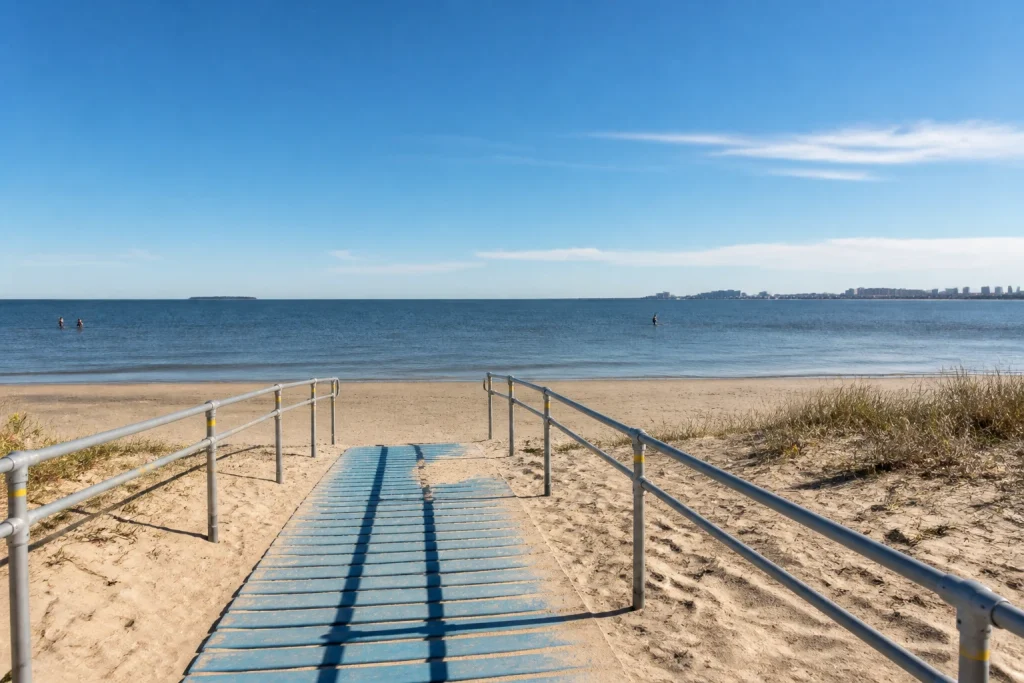
The staffed Playa Accesible service was free during the 2025–2026 season and was exceptionally extended through March 7, 2026. That extension should not be treated as the standard annual schedule. For dates outside an active program period, confirm current municipal arrangements before counting on wheelchair assistance or staffed support at the beach.
Build a safer Punta del Este beach day
The best beach plan leaves room to change course. Pick a lifeguard-towered area as your swimming base, keep children close, and be prepared to make the water portion of the day shorter or skip it if flags require that choice. A picnic, a walk, and time on the sand can still be enjoyable when bathing is not enabled.
- Before leaving: review current environmental information if water quality or jellyfish are a concern.
- On arrival: locate a lifeguard tower and read every posted flag.
- Before swimming: identify a safe entry area and check for a red rip-current pennant.
- With children: keep an adult within arm’s reach at all times near the water.
- With inflatables: leave them unused when wind is blowing from land toward the sea.
For help choosing travel dates beyond the beach, When to Visit: Summer Season vs Quiet Off-Season offers broader seasonal context for Punta del Este. Regardless of the date, do the on-site safety check before swimming. A familiar beach can present different conditions on a different day, and the lifeguard’s direction should set the plan.
Make safety your first beach decision
Punta del Este is best enjoyed with a flexible beach mindset: swim where a lifeguard tower and the flags support it, stay out when they do not, and treat currents, wind, and sanitary alerts as real-time information. That is the approach that suits every kind of traveler, from families managing a busy beach day to independent swimmers looking for a straightforward, responsible plan.
Frequently asked questions
Are Punta del Este beaches safe for swimming?
They are safer for swimming when you choose an authorized area marked by a lifeguard tower and follow the posted flags and lifeguard instructions. Same-day conditions can change, so make that check when you arrive rather than assuming a beach is suitable in advance.
What do the beach flags mean in Punta del Este?
Green means bathing is enabled, yellow means caution, and red means bathing is not enabled. A black flag with lightning means leave the beach because of an electrical storm, while a red pennant at the shoreline identifies rip-current danger.
What should I do if I am caught in a rip current?
Stay calm, do not swim against the current, and move parallel to shore if you can. If that is not possible, float and signal for help by raising one arm.
Can children use the water if they know how to swim?
Yes, but they should still remain within arm’s reach of the supervising adult. Swimming ability does not remove beach risk, so select a lifeguard-towered swimming area and keep close watch at the water’s edge.
What does a sanitary flag mean at the beach?
A sanitary flag signals a potential health risk, so do not bathe in that area. Alerts can be connected to cyanobacterial blooms, elevated fecal-indicator bacteria, or other environmental events.
Is there an accessible beach in Punta del Este?
Yes. The listed accessible beach is at Playa Mansa, Parada 8, where access infrastructure is available year-round. The staffed Playa Accesible service is normally seasonal, so confirm current assistance arrangements before visiting outside its active period.
Is Playa Mansa’s accessible beach service free?
The staffed Playa Accesible service was free during the 2025–2026 season. Future program dates and service details should be checked with the municipality before your visit.
Experiences to explore
 Explore experience ↗
Jose Ignacio Beach from Punta del Este
◷ 4 hr
Discover José Ignacio and its quiet beaches. Located 40 km from Punta del Este, José Ignacio is a beautiful town known as an oasis of p
See dates for Current pricing
View dates Explore experience ↗
Piriapolis Beach from Colonia del Sacramento or Montevideo
◷ 4 hr
Beautiful opportunity to get to know Piriapolis on this city tour through the city enjoying the most important and beautiful and mystic
See dates for Current pricing
View dates