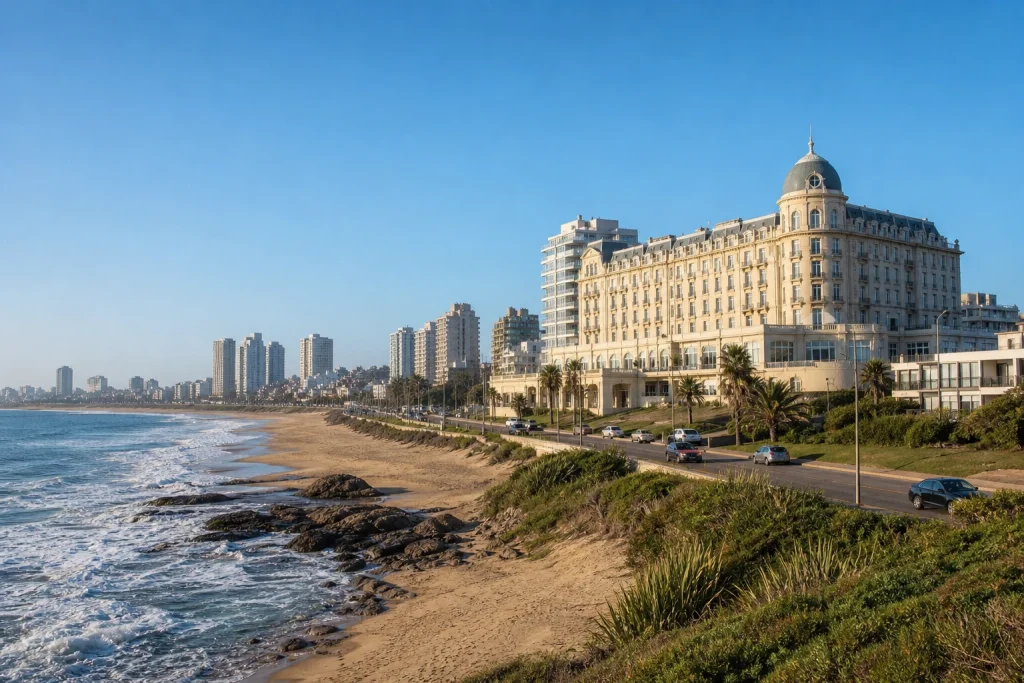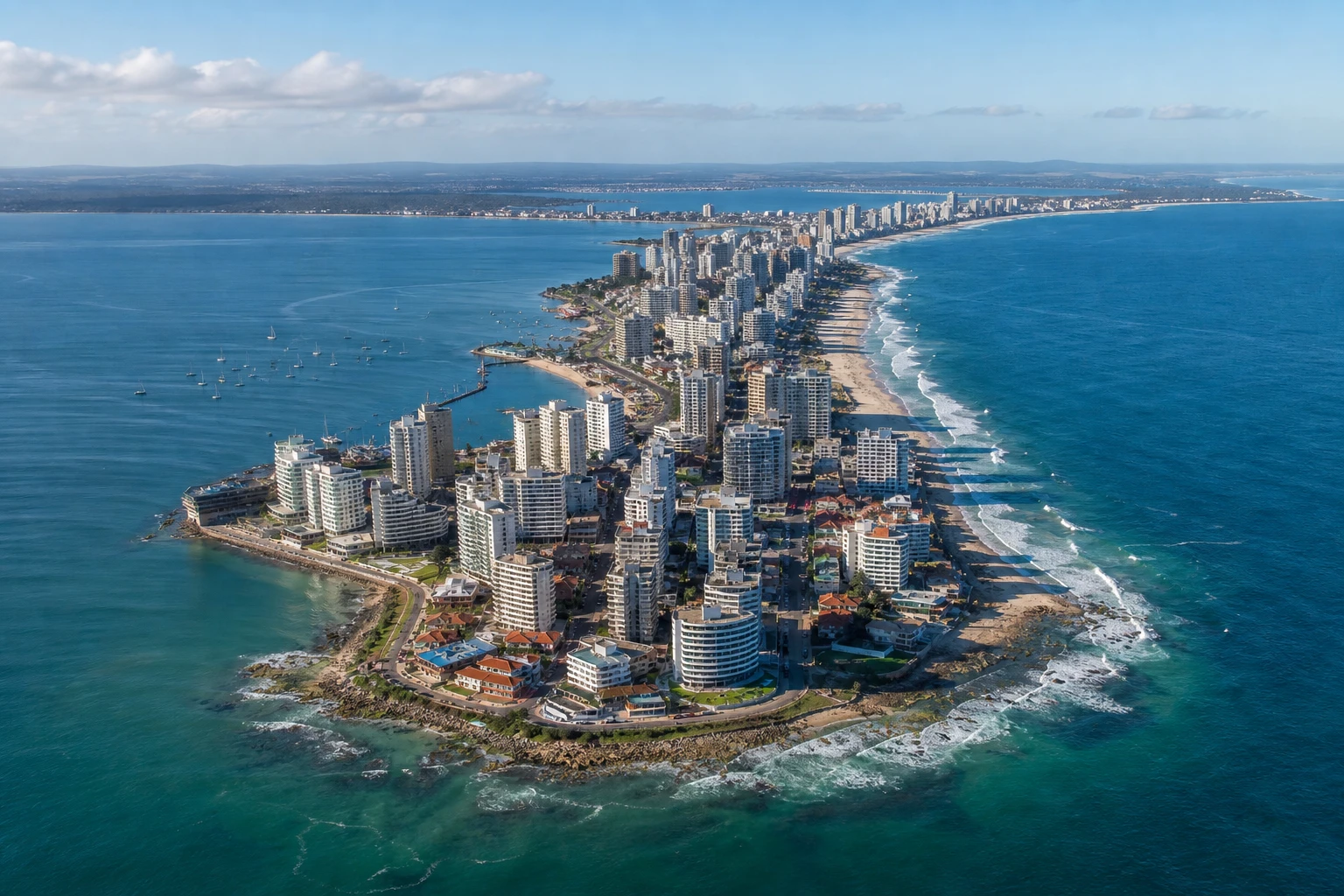
For most first-time visitors, the Peninsula is the easiest place to stay in Punta del Este. This compact central base sits between the Mansa and Brava sides and has the strongest concentration of services. It is especially practical if you plan to explore on foot and would rather not arrange transportation every time you leave your accommodation.
- Choose the Peninsula for the most convenient first visit without a car.
- Start with Playa Mansa if calmer water is your main beach priority.
- Choose Playa Brava for an ocean-facing setting and larger-wave character.
- Consider La Barra, Manantiales, or José Ignacio if atmosphere matters more than central walkability.
- Map the exact property before booking, especially when an address uses only a parada reference.
- Check current transportation and seasonal business schedules shortly before traveling.
The best area still depends on the trip you want. Beach conditions, transportation, summer crowds, dining plans, and your tolerance for late activity all matter. Punta del Este also stretches into a broader coastal travel pattern, so a property marketed with the destination name can be farther from the Peninsula than expected.

Punta del Este Shore Excursion: Private Sightseeing Tour of Punta del Este
Explore the sophisticated resort town of Punta del Este on this 4-hour private shore excursion. With a private guide, enjoy a scenic drive with stunni...

Punta del Este & Coastal Villages Private Tour
Discover the beauty, culture, and artistic charm of Punta del Este and its surroundings on this private 4-6 hour tou...

Private Have It Your Way Tour in Punta Del Este
Be prepared for an exclusive trip through Punta del Este with a true local! We will share our knowledge in an engag...

Candelaria Church and Punta del Este Old Town Private Tour
Step inside a beloved seaside church, admire the 1860 lighthouse, and stand at Uruguay’s southernmost point. Disco...
The quick answer: match your base to your daily routine
Pick the Peninsula if this is your first visit, you are staying only a few days, or you want to minimize transportation. It offers the simplest introduction to central Punta del Este and allows you to move between the Mansa and Brava sides without treating every outing as a separate excursion.
Look toward Playa Mansa when gentler-looking water is central to the trip. Choose Playa Brava when the open-ocean setting matters more. Conditions change with weather and the day, so neither side should be treated as a promise of safe swimming, strong surf, or any specific wave pattern.
La Barra, Manantiales, and José Ignacio work better as deliberate coastal bases. They can suit travelers who want to spend much of the trip east of central Punta del Este, but they reduce the convenience of walking to the Peninsula. The precise address and return transportation deserve attention before you commit.
| Area | Best for | Main trade-off |
|---|---|---|
| Peninsula | First visits, short stays, and car-free convenience | More crowds, traffic, and noise during peak summer |
| Playa Mansa | Travelers prioritizing the calmer-water side | Conditions still vary, so choose by setting rather than guarantees |
| Playa Brava | Travelers who prefer an ocean-facing beach environment | Larger-wave character does not guarantee surf or swimming conditions |
| La Barra | A seasonal coastal atmosphere east of central Punta | Less walkable to the Peninsula and more dependent on transport planning |
| Manantiales | Travelers intending to focus on the eastern coast | Exact property location becomes important for daily logistics |
| José Ignacio | A separate coastal stay rather than a central Punta base | Farther from central services and commonly expensive in peak season |
The Peninsula is the easiest all-around base
The Peninsula is the safest default recommendation in the planning sense: it makes a first visit easier to organize. Its position between Playa Mansa and Playa Brava lets you sample both sides while remaining close to the central concentration of services. That flexibility is valuable when wind, waves, or personal energy change the day’s plans.
This is the strongest option for travelers arriving without a car. Staying centrally reduces the number of transfers needed for ordinary meals, walks, and beach time. It also avoids relying on a timetable for every return to your room, although transportation is still necessary for places farther along the coast.
A walking route around the Peninsula’s lighthouse, marina, and Gorlero also fits naturally into a centrally based stay. You can break the outing into smaller sections rather than dedicating a whole day to reaching the central sights. That is useful during a short visit or when beach weather changes unexpectedly.
Who should choose the Peninsula
- First-time visitors who want a straightforward orientation to Punta del Este
- Travelers planning to walk to central services and both beach sides
- Visitors taking a short trip with limited time for transfers
- Couples or groups whose members have different beach preferences
- Anyone arriving by intercity bus and hoping to simplify local movement
The Peninsula’s peak-season trade-off
Convenience attracts people. Late December and January bring the strongest peak-period caveat, with greater potential for crowds, traffic, and noise. If sleep and personal space matter more than walking convenience, inspect the property’s exact position and recent room descriptions carefully rather than booking solely because the address says Peninsula.
A central stay does not require spending every day there. The Peninsula can function as a transport-efficient home base for trips east toward La Barra or José Ignacio. This arrangement usually suits first timers better than sleeping farther out and repeatedly traveling back to central Punta del Este.

The Best of Punta del Este Old Town Private Walking Tour
Discover the best of Punta del Este’s historic center, from the iconic Fingers sculpture to the historic lighthous...

Visit MACA Atchugarry Meseum & Casapueblo.Private Transport
Discover the artistic soul of Punta del Este on this private half-day tour, combining two of Uruguay's most iconic c...

Wine Experience Bodega Oceánica Visit and Lunch at Bodega Garzón
Enjoy a seamless and memorable wine experience with private transportation from Punta del Este. We will pick up all...
Playa Mansa suits travelers who prioritize calmer water
Playa Mansa is the logical side to consider when calmer water shapes your accommodation choice. National tourism information distinguishes Uruguay’s calmer-water beaches from those with larger waves, while local area guidance characterizes Mansa as Punta del Este’s calmer side. Daily conditions still matter, so assess the beach when you arrive.
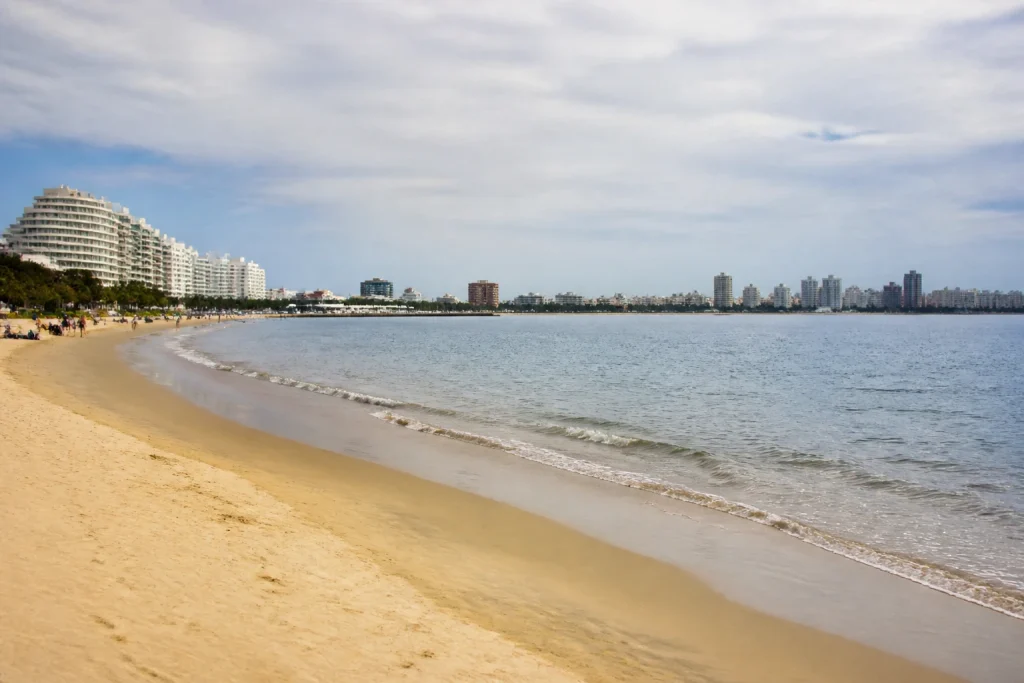
A Mansa-side stay can work well when the beach is the main event but you still want access to central Punta del Este. The important detail is distance. A property near the Peninsula produces a different routine from one farther along the coast, even if both use Playa Mansa in their description.
Do not choose solely from a broad neighborhood label. Map the walk to the places you expect to use, note any major roads along the route, and check how you would return after dinner. These small checks reveal whether the property offers genuine convenience or simply a view of the right side of the coast.
A Playa Brava versus Playa Mansa beach comparison is worth reading before selecting a side. The decision is less about declaring a winner and more about matching the beach environment to your preferred pace, while keeping changing sea conditions in mind.
Choose the Mansa side if these priorities sound familiar
- You prefer the coast’s calmer-water character.
- You expect to make the beach part of most days.
- You have found a property with a practical route to central services.
- You are willing to compare exact addresses rather than relying on area names.
Playa Brava offers an ocean-facing beach setting
Playa Brava is the better starting point for travelers drawn to an ocean-beach environment. Its larger-wave character contrasts with the Mansa side, but conditions vary daily. A Brava address should never be treated as a guarantee of surfable waves, safe swimming, or a particular level of wind.
As on the Mansa side, location within the area changes the experience. Staying near the Peninsula preserves more central convenience. Choosing accommodation farther along Playa Brava can shift the trip toward beach time and increase the importance of local transportation for meals and central sightseeing.
Brava is a sensible choice when you already know that the ocean-facing side is part of Punta del Este’s appeal for you. If you are undecided, the Peninsula offers more flexibility because it keeps both Mansa and Brava within the same compact central base.
Questions to ask before booking on either beach side
- How far is the property from the Peninsula and the services you plan to use?
- Is the route practical on foot at the times you expect to travel?
- What transportation options remain available for the return journey?
- Does the room face an area where peak-season activity could affect sleep?
- Is the beach side itself more important than central convenience?
La Barra, Manantiales, and José Ignacio require a different plan
La Barra, Manantiales, and José Ignacio should be treated as distinct coastal destinations east of Punta del Este, not interchangeable central neighborhoods. They can be appealing bases, but choosing one changes the geography of the trip. Walking to the Peninsula is no longer the organizing idea, so transportation and local operating patterns become more important.
Still comparing Punta Del Este First Time Accommodation Planning?
Ask for tour ideas, hotel suggestions, or a simple trip plan that combines both.
Trip Helper
La Barra for a more seasonal social atmosphere
La Barra suits visitors who want to focus on the coast east of central Punta del Este and accept less convenient access to the Peninsula. The area becomes livelier during the summer period and substantially less active outside it. Travelers visiting beyond summer should check that the accommodation and dining choices central to their plans will be operating.
For evening planning, La Barra after sunset brings galleries, the wavy bridge, and late dinners into the conversation. If those experiences are a major reason for visiting, sleeping locally can reduce the need to coordinate a late return to Punta del Este. If they are only one evening’s plan, a central base may remain more efficient.
Manantiales as a separate eastern-coast base
Manantiales belongs in the same broader coastal itinerary but should still be evaluated on its own. For first timers, the practical question is how often you intend to visit central Punta del Este. Frequent central trips favor the Peninsula, while an east-focused itinerary makes a base such as Manantiales easier to justify.
Map each property rather than assuming that neighboring destination names mean easy movement between them. Check the route to your preferred beach, meals, and any evening plans. Coastal distances become noticeable when every outing requires a separate ride or must fit around a limited transport schedule.
José Ignacio for an intentionally separate stay
José Ignacio is best approached as its own coastal stay rather than lodging for daily exploration of central Punta del Este. It commonly sits toward the expensive end of the area’s qualitative peak-season hierarchy. Choose it because you want to spend meaningful time there, not because a broad search result places it under the Punta del Este umbrella.
A slow coastal day in José Ignacio fits naturally when you stay nearby or build it into a deliberate outing. Visitors hoping to divide every day between José Ignacio and the Peninsula should examine current transportation carefully, including the final return option.
Decide whether you need a car before choosing the property
Car need is a neighborhood question, not a rule for the whole destination. A Peninsula stay is the strongest choice for minimizing routine transfers. More dispersed coastal bases call for closer attention to the property address, nearby bus service, evening return options, and the places you expect to visit most often.
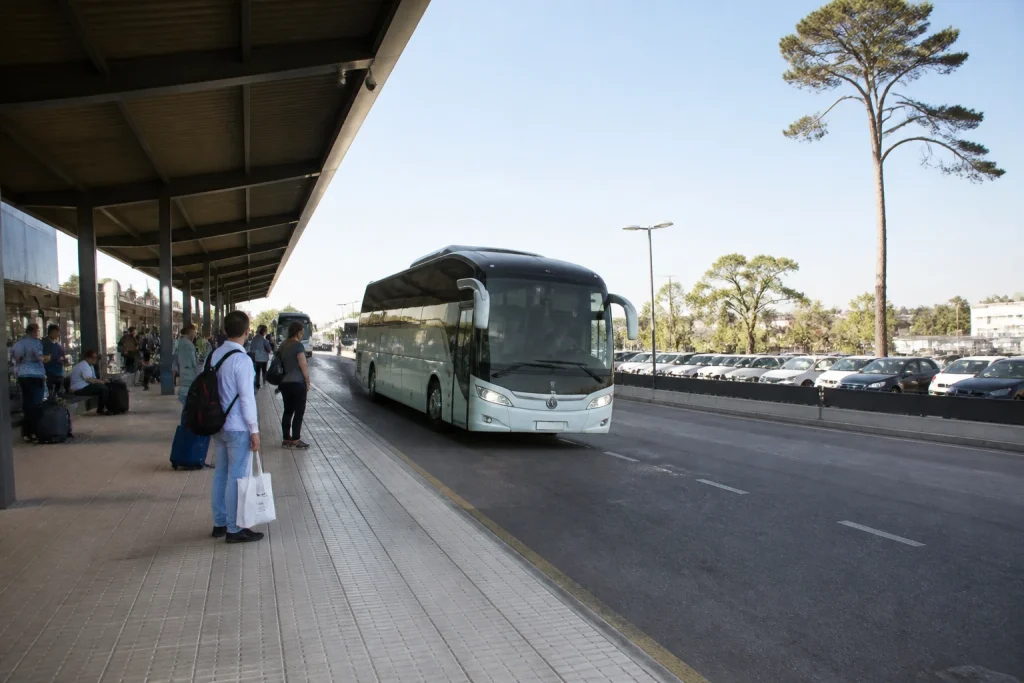
A rental car can simplify an itinerary spread across central Punta del Este and the eastern coast, but it does not remove every logistical concern. Peak-summer traffic can still slow journeys, and parking arrangements vary by accommodation. Check the property’s parking information before booking rather than assuming a space is included.
Without a car, focus first on what you can reach during an ordinary day. A bus route that works for arrival does not necessarily provide frequent local mobility near every hotel. This distinction matters in La Barra and José Ignacio, where selected intercity services continue beyond Punta del Este but do not establish an all-day connection for every lodging address.
Arriving from Montevideo or Carrasco airport
Published intercity services connect Montevideo and Carrasco airport with Maldonado and Punta del Este. Selected services continue toward La Barra and José Ignacio. Operator times are estimates and can be affected by traffic, so check the current timetable and fare immediately before travel, particularly if your accommodation lies east of the Peninsula.
Avoid building a tight connection around an estimated arrival. Leave room for traffic and confirm how you will cover the final distance between the stop and your accommodation. A property can look conveniently placed on a regional route while still requiring an additional local transfer.

Private Tour in Punta del Este
You will live the Punta del Este experience on an exciting guided tour with personalized service where you will disc...

Full Experience Tasting Menu Viña Edén
Our vineyards sit on Pueblo Eden’s rocky mountains slopes. The mineral character of our soils and it’s oceanic i...

Five Course Tasting Menu
Our vineyards sit on Pueblo Eden’s rocky mountains slopes. The mineral character of our soils and it’s oceanic i...
Season changes both atmosphere and value
December through March is the broad Southern Hemisphere summer period, with the strongest peak around late December and January. This is when central areas can experience heavier crowds, traffic, and noise, while seasonal coastal destinations such as La Barra become more active.
A summer-season versus off-season comparison should influence where you stay. Outside the main season, lower demand can bring better value, but some hotels, restaurants, and nightlife businesses operate seasonally. Confirm the handful of places important to your trip rather than assuming an entire district will follow its summer rhythm.
Peak-season accommodation in central beach areas, La Barra, and especially José Ignacio is commonly positioned toward the more expensive end of the local market. Exact rates change by property, room, date, and demand. Compare bookable options for your actual travel dates instead of relying on a generic nightly estimate.
How to balance cost and location
The lowest room price is not always the least expensive plan. A distant property can add transportation costs and consume time each day. Compare the accommodation rate with the number of journeys you expect to make, especially if your itinerary centers on the Peninsula while your room is farther east.
For a short first visit, paying for a practical central location can simplify the trip. For a longer beach-focused stay, a property outside the Peninsula can make sense if you are content to spend most days nearby. The right value comes from matching location to routine, not simply selecting the cheapest listing.
Check these details before booking accommodation
Punta del Este accommodation searches reward close map reading. Coastal labels can cover meaningful distances, and some listings describe locations using a parada reference. Plot the actual address before paying, then compare it with the beach, services, bus stops, and evening destinations you expect to use.
- Map the property’s exact address instead of relying on the neighborhood name.
- Measure the route to your preferred beach and central services.
- Check current bus options and the final return service if you will not drive.
- Confirm whether key seasonal restaurants or services will operate during your stay.
- Review the room’s position if peak-period street activity could affect sleep.
- Compare the total transport routine, not just the nightly accommodation rate.
Planning for mobility and other access needs
Do not assume that one neighborhood is more accessible than another. Travelers with mobility, sensory, or other access needs should obtain written confirmation from the accommodation and transport provider about the features that matter to them, including step-free routes, lifts, adapted bathrooms, beach access, and transfer arrangements.
Ask questions that match your exact equipment and routine. Useful measurements can include doorway width, lift dimensions, bathroom layout, and the number of steps between the entrance and room. If beach access is important, confirm the route from the property rather than assuming that a short map distance means a step-free journey.
The best area for each type of first trip
For a two- or three-part first visit built around central walks, beach time, and simple meals, choose the Peninsula. It provides the clearest balance of location and flexibility, particularly without a car. The main reason to look elsewhere is a strong preference for one beach environment or an east-coast-focused itinerary.
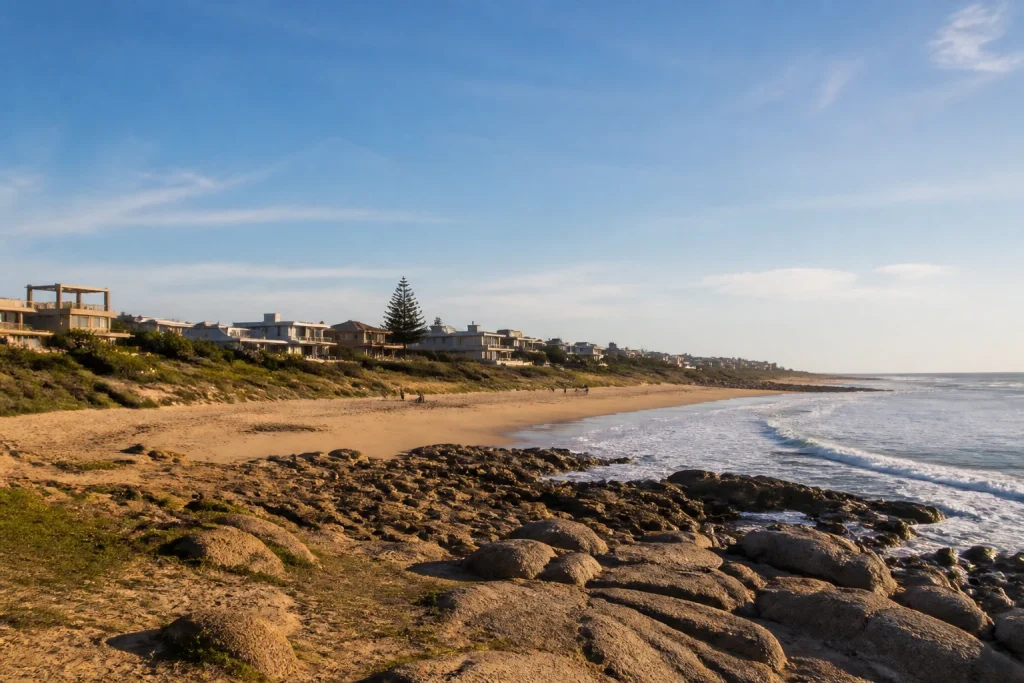
For a beach-led trip, begin with the Mansa versus Brava decision. Mansa is the more logical starting point for calmer-water preferences. Brava favors travelers seeking an ocean-facing setting. Then compare each property’s precise location, because convenience changes as you move away from the Peninsula.
For a summer social trip focused east of Punta del Este, consider La Barra. For a separate coastal stay with little need to return downtown, evaluate Manantiales or José Ignacio on their own merits. In all three cases, transportation deserves the same attention as the room itself.
Make the Peninsula your default, then depart from it for a reason
The Peninsula is the best starting recommendation for most first timers because it keeps central services and both beach sides within the simplest daily pattern. It is particularly useful for short stays and car-free trips. Its chief limitation is the potential for greater crowds, traffic, and noise during the summer peak.
Choose Mansa or Brava when beach character outweighs maximum central convenience. Move farther east only when La Barra, Manantiales, or José Ignacio is a central part of the trip. Once you know that priority, map the exact property, check current transportation, and book the location that supports your real daily routine.
Frequently asked questions
What is the best area to stay in Punta del Este for first-time visitors?
The Peninsula is the best default area for most first-time visitors. It offers the strongest concentration of central services, sits between the Mansa and Brava sides, and is the easiest base for reducing transfers without a car.
Can you stay in Punta del Este without a car?
Yes, especially if you stay on the Peninsula. Accommodation farther along the coast requires more careful checking of bus routes, property location, and evening return options.
Is Playa Mansa or Playa Brava better for accommodation?
Playa Mansa is the more logical choice for travelers prioritizing calmer water, while Playa Brava suits those who prefer an ocean-facing beach setting. Actual wave and swimming conditions vary from day to day.
Is La Barra a good base for a first visit?
La Barra can be a good base if its seasonal coastal atmosphere is a major focus of the trip. It is less convenient for walking to central Punta del Este, so transportation and the time of year matter.
Should I stay in José Ignacio and visit Punta del Este from there?
Choose José Ignacio as a separate coastal base rather than a substitute for central Punta del Este. It works best when you plan to spend substantial time there and have considered transportation for any trips back to the Peninsula.
When is accommodation most expensive in Punta del Este?
Peak summer, particularly late December and January, generally brings the strongest demand in central beach areas, La Barra, and José Ignacio. Exact rates vary by property and date, so compare bookable rooms for your travel period.
Do buses run from Montevideo airport to Punta del Este?
Published intercity services connect Carrasco airport with Maldonado and Punta del Este, with selected services continuing farther east. Schedules, fares, and estimated arrival times can change, so check the operator’s current information before traveling.
Which Punta del Este area is best for travelers with accessibility needs?
No single neighborhood should be treated as the default accessible choice. Confirm the required step-free routes, lift measurements, bathroom configuration, beach access, and transfer arrangements directly with each accommodation and transport provider before booking.
Punta del Este Shore Excursion: Private Sightseeing Tour of Punta del Este
Explore the sophisticated resort town of Punta del Este on this 4-hour private shore excursion. With a private guide, enjoy a scenic drive with stunni...
Private Have It Your Way Tour in Punta Del Este
Be prepared for an exclusive trip through Punta del Este with a true local! We will share our knowledge in an engag...
Candelaria Church and Punta del Este Old Town Private Tour
Step inside a beloved seaside church, admire the 1860 lighthouse, and stand at Uruguay’s southernmost point. Disco...
Punta del Este & Coastal Villages Private Tour
Discover the beauty, culture, and artistic charm of Punta del Este and its surroundings on this private 4-6 hour tou...
Experiences to explore
 Explore experience ↗
Half Day Tour in Punta del Este and Jose Ignacio
◷ 5 hr
Discover the enchanting beauty of José Ignacio and its peaceful beaches on this unique tour. On this tour, we will get to know the sere
See dates for Current pricing
View dates Explore experience ↗
Jose Ignacio Beach from Punta del Este
◷ 4 hr
Discover José Ignacio and its quiet beaches. Located 40 km from Punta del Este, José Ignacio is a beautiful town known as an oasis of p
See dates for Current pricing
View dates Explore experience ↗
Visit Garzon Winery and Jose Ignacio. Private Driver.
◷ 6 hr
This private experience combines the very best of Uruguay’s wine country with the charm and sophistication of José Ignacio. The experie
See dates for Current pricing
View dates