
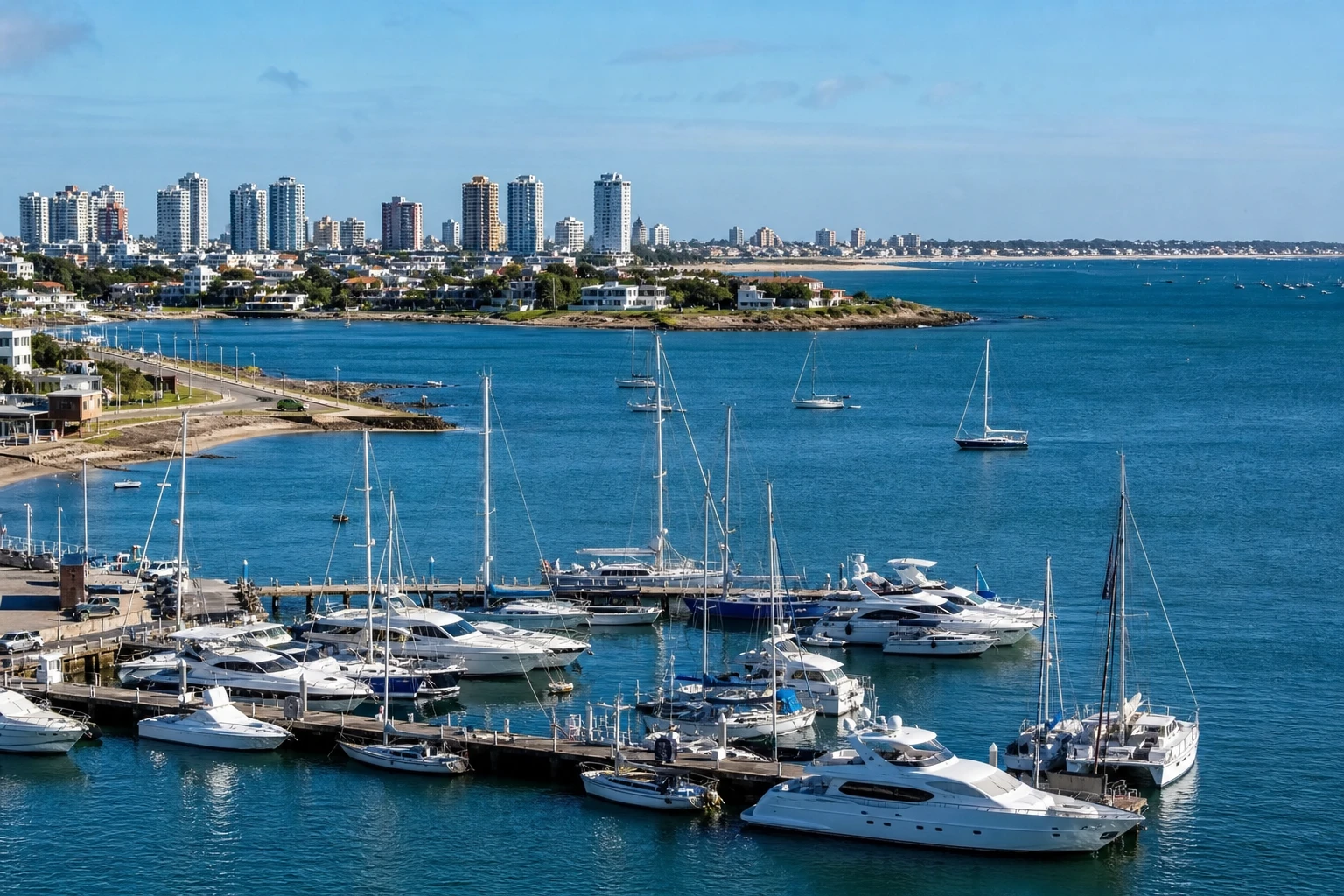
Punta del Este is shaped by the water around it, and a boat trip reveals a side of the peninsula that cannot be seen from the promenade. Most sightseeing and fishing outings begin at the port. The two signature routes have distinct personalities: nearby Isla Gorriti is suited to beach time, while offshore Isla de Lobos centers on protected landscapes and marine wildlife.
- Choose Isla Gorriti for a short crossing, beaches, swimming, and a relaxed summer outing.
- Choose Isla de Lobos for wildlife viewing and a longer journey in more exposed water.
- Book a private charter when schedule flexibility, privacy, and control over the day matter most.
- Confirm the departure time, weather policy, life jackets, route, and included services before paying.
- Ask about boarding arrangements in advance if anyone in the group has limited mobility.
The best choice depends less on the size of the vessel than on the experience you want. Families and beach-focused groups often find Gorriti easier to fit into a flexible day. Wildlife enthusiasts gain more from Isla de Lobos, provided they are comfortable with a longer ride. Private yachts offer freedom, but their total cost and inclusions require closer comparison than a straightforward shared excursion.

Jewish History Punta del Este Old Town Private Walking Tour
Uncover Punta del Este’s Jewish heritage as you explore synagogues, cultural landmarks, and hidden gems. Stroll through vibrant markets, find kosher...

Punta del Este Classic City Tour with Sunset at Casapueblo
This tour is the best way to get to know Punta del Este in depth. If it's your first time in Punta, we recommend tak...

Private Tour in Punta del Este
You will live the Punta del Este experience on an exciting guided tour with personalized service where you will disc...

Punta del Este Shore Tour for Cruise Passengers
Join us on a tour to discover Punta del Este, one of Latin America’s most exclusive destinations. With its elegant...
Choose between Isla Gorriti and Isla de Lobos
Punta del Este’s two best-known island outings are not interchangeable. Isla Gorriti is close to the port and built around a beach day. Isla de Lobos lies about 8 kilometers offshore and is primarily a protected wildlife destination. Comparing the crossing, setting, and likely pace makes the decision much easier.
| Feature | Isla Gorriti | Isla de Lobos |
|---|---|---|
| Main appeal | Beaches, swimming, anchoring, and seasonal beach service | Marine-fauna viewing and a protected island landscape |
| Crossing | About 15 minutes from Punta del Este’s port | About 8 kilometers offshore; one advertised excursion allows roughly 40 minutes each way |
| Typical pace | Flexible beach or boat day | Route-focused wildlife excursion |
| Best fit | Families, swimmers, and relaxed groups | Wildlife enthusiasts and travelers comfortable with a longer ride |
| Key planning point | Do not assume seasonal services operate outside summer | Confirm current wildlife, swimming, snorkeling, and approach rules |
Isla Gorriti for beaches and an easy crossing
Isla Gorriti sits about 15 minutes by boat from Puerto de Punta del Este. The 21-hectare island has beaches and a seasonal beach-bar service, giving summer trips a simple rhythm: cross the bay, settle near the sand, swim if conditions permit, and return without committing most of the day to travel.
Private-yacht providers also present Gorriti as a calm-water anchoring destination suited to swimming and onboard meals. Treat food, drinks, towels, water equipment, and time at anchor as package-specific rather than automatic. A bare vessel hire and a catered yacht day can sound similar in an advertisement while delivering very different experiences.
Gorriti is the more forgiving option when some travelers want the boat ride and others mainly want a beach. Its short crossing also leaves room for lunch or a walk later in the day. Outside summer, plan around the island itself rather than counting on beach services, since the parador operates seasonally.
Isla de Lobos for marine wildlife
Isla de Lobos is the more adventurous route. Official information places it about 8 kilometers offshore and identifies the island, nearby islet, and submerged surroundings as a protected national-park area. South American fur seals and sea lions are among its defining animals, making observation rather than beach time the central purpose of the trip.
One local operator describes an approximately two-hour round trip, with about 40 minutes in each direction and another 40 minutes traveling around the island. That timing is a useful example, not a universal schedule. Vessel speed, sea state, route permissions, and the selected product can all shape the final itinerary.
Some outings advertise swimming, snorkeling, diving, or anchoring near the island. Do not assume those activities are included or allowed on every departure. Current rules, operator permissions, sea conditions, and wildlife protocols govern what can happen on the day. Choose a provider that explains how passengers observe animals without crowding or disturbing them.
Match the boat style to your group
A shared sightseeing boat, private motorboat, yacht charter, and fishing trip solve different travel problems. Start by deciding how much privacy and schedule control you need. Then compare the route, usable space, shade, toilet access, and what happens if conditions change.
Shared sightseeing excursions
A shared excursion is usually the simplest choice for one or two travelers who want a defined route. The operator determines the departure time and pace, and passengers share the vessel with other groups. Before booking, check whether the trip circles an island, stops for beach time, anchors for swimming, or stays aboard throughout.
Shared departures also require punctuality. Locate the meeting point at the port before boarding time and keep the operator’s contact details available. Passenger timetables are set by individual companies, not by the port’s published launch and retrieval hours, so use the time on your booking confirmation.
Private yachts and motorboat charters
A private charter suits families, celebrations, photographers, and groups that value space. Providers market Gorriti for anchoring and swimming and Isla de Lobos for a more remote wildlife experience. Privacy and flexibility are the advantages. The tradeoff is a higher, less transparent total cost that depends on the vessel and included services.
Ask whether the quoted period begins at boarding or includes navigation time, and identify any limits on the route. Also clarify the passenger capacity, crew, fuel, food, drinks, cleaning, port charges, and optional equipment. A useful quote should show the complete amount for your group rather than only a starting figure.
Still comparing Sightseeing?
Ask for tour ideas, hotel suggestions, or a simple trip plan that combines both.
Trip Helper
Fishing trips
Fishing boats also operate from Punta del Este’s port. These trips need more specialized questions than a sightseeing cruise. Confirm whether rods, tackle, bait, licenses, refreshments, and fish handling are included. Ask how the captain changes the plan when wind or sea conditions make the preferred fishing area unsuitable.
Start at Puerto de Punta del Este
Puerto de Punta del Este is the practical embarkation point for sightseeing boats, fishing trips, and island departures. It sits on the peninsula, making it easy to combine a cruise with the marina, central streets, or a coastal walk. Confirm the exact dock or meeting point because the port contains many berths and working areas.
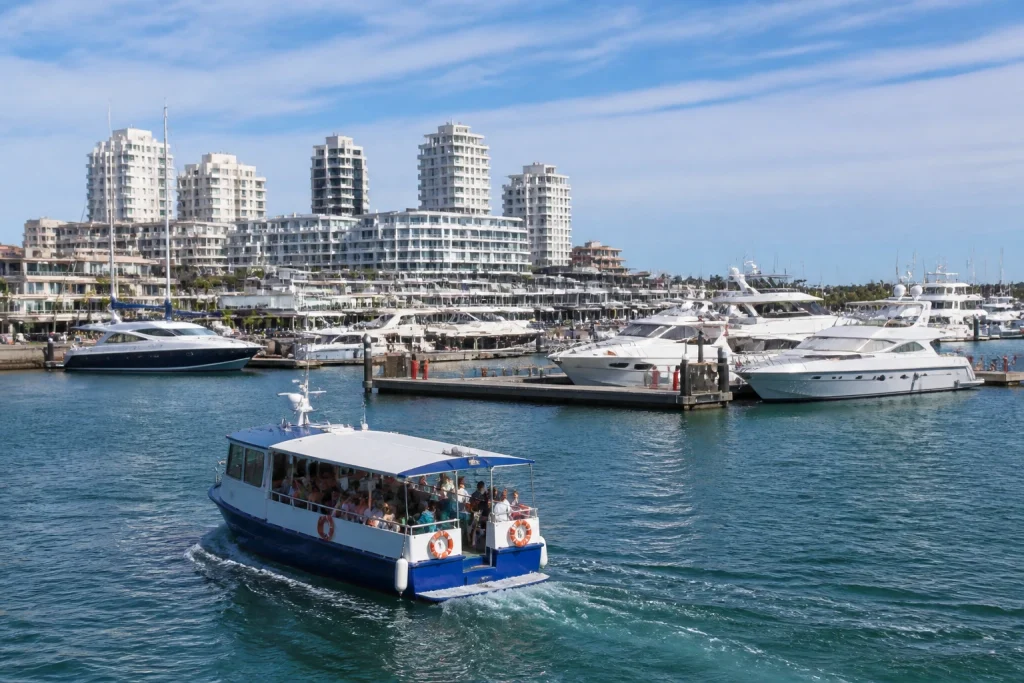
Official port information lists 535 berths, a launch ramp, 24-hour surveillance, and parking for 250 vehicles. These facilities help explain the marina’s scale, but a listed parking capacity does not guarantee a space at your departure time. Allow extra time during busy periods and avoid planning to arrive at the last minute.
Travelers arranging their own boating should note that the port uses VHF channel 20, while Prefectura is associated with channels 9 or 16. Recreational passengers normally follow their operator’s arrival instructions instead. The captain and crew remain the appropriate source for boarding directions and day-of operational updates.
Plan for Punta del Este’s boating seasons
Summer offers the most natural pairing of boating and beach time. Isla Gorriti’s seasonal parador can add food service to a warm-weather outing, while the short crossing keeps the day flexible. In winter and the shoulder periods, do not build the plan around seasonal island services. Boat availability and schedules remain operator-dependent.
The port distinguishes high season as December 16 through February 28 or 29 and operates some launch and retrieval services for longer hours during that period. Those hours are not passenger-tour schedules. Each operator sets its own departure time, check-in requirement, and weather decision.
A broader look at Punta del Este’s summer season versus the quieter off-season can help with the rest of the trip. Summer supports a beach-centered itinerary but also calls for earlier reservations and extra arrival time. Outside peak season, flexibility matters more because island services and boat departures are less predictable.
Wind and sea state matter even when the sky looks clear from shore. Isla de Lobos is farther offshore than Gorriti, so a captain’s route or cancellation decision can differ between the two. Keep the hours after the excursion flexible, especially when boating is the main event of the day.
Compare operators before booking
A good comparison starts with the route and operating plan, not glossy pictures of the vessel. Two listings using the phrase “Isla de Lobos tour” can involve different boat sizes, passenger numbers, viewing time, and rules for water activities. For Gorriti, the major difference is often whether the trip is transportation, a short cruise, or a longer private anchoring experience.
- Confirm the exact island, route, total duration, departure time, and meeting point.
- Ask for the vessel name or type, passenger limit, shade, toilet availability, and life-jacket arrangements.
- Check whether passengers stay aboard, land, anchor, swim, or snorkel, and what current rules allow.
- Review the sea-state decision process and the cancellation, rescheduling, and refund terms.
- For a charter, request an all-in quote listing crew, fuel, food, drinks, equipment, and additional charges.
- Discuss minimum age, mobility needs, transfer assistance, and any health restrictions before payment.
For Isla de Lobos, give extra weight to operators that clearly describe permissions and wildlife protocols. The area belongs to Uruguay’s protected-area system, and a responsible trip should treat animal welfare and current access rules as central parts of the itinerary rather than inconvenient details.
Understand prices and charter quotes
There is no single dependable public fare that covers Punta del Este boat tours. Costs vary with the vessel, route, duration, group size, season, and inclusions. Private-charter listings can show starting figures without making clear whether fuel, crew, food, or a full outing is included, so headline numbers are poor comparison tools.

For shared trips, compare the final per-person charge and the experience delivered. For private boats, compare the complete group total. A higher quote that includes fuel, crew, refreshments, and several hours aboard can be better value than a lower base rate with substantial additions.
Read the cancellation terms with weather in mind. Ask who makes the sea-state decision, when passengers are notified, and whether a canceled trip is refunded or moved to another date. This matters most for a short Punta del Este stay, when rescheduling could conflict with onward travel.
Respect wildlife and changing sea conditions
Isla de Lobos protects more than a scenic horizon. The national-park area includes the island, an islet, and the surrounding submerged environment. South American fur seals and sea lions live in this setting, so the value of the excursion comes from observing a functioning habitat rather than pursuing the closest possible encounter.
Follow crew instructions about where to stand, when to move, and whether entering the water is permitted. Swimming, snorkeling, diving, anchoring, and landing should never be assumed. Rules and safe operating limits can depend on current permissions, sea conditions, and the behavior of wildlife.
Life jackets should be addressed before departure, along with minimum ages and any swimming requirements. If a traveler is pregnant, has a recent injury, or struggles with balance, discuss the ride and boarding method before booking. A small boat can move sharply even on a pleasant-looking day.
Pack for spray, sun, and boat movement
Keep the packing list compact. Bring sun protection, a secure hat, water, a light wind-resistant layer, and any personal medication. A small dry bag or sealed pouch protects phones and documents from spray. Wear shoes that grip and avoid carrying loose objects that can roll or blow across the deck.
- Sun protection and a hat that can be secured
- Water and any snacks not provided by the operator
- A light layer for wind and spray
- Swimwear and a towel only when water time is confirmed
- Motion-sickness medication taken according to its directions
- A waterproof pouch for electronics and documents
Travel light if the vessel is small. Storage can be limited, and bulky bags make boarding harder. If photography is a priority, use a strap and bring a lens cloth. Wildlife viewing rewards patience more than heavy equipment, particularly when the boat must maintain an appropriate distance.
Ask about accessibility boat by boat
The port lists inclusive-access public showers, but that does not describe accessibility aboard individual tour boats. Step-free boarding, stable gangways, wheelchair securement, accessible toilets, transfer help, and crew assistance vary by vessel. Confirm the complete boarding process before payment if anyone has limited mobility.

Useful questions are concrete. Ask about the height and width of the boarding step, whether a wheelchair can remain aboard, where a mobility aid will be stored, and whether passengers must transfer to a fixed seat. Also ask how the return landing changes with the tide or marina conditions.
Families should confirm minimum ages, child-sized life jackets, shade, toilet access, and the expected time without a stop. Gorriti’s short crossing can be easier for young travelers, while Isla de Lobos demands more time underway. The right decision depends on the child’s comfort with boat movement as much as age.
Build the boat trip into a peninsula day
The port’s peninsula location makes it practical to pair a cruise with time on land. A short Isla Gorriti outing can leave room for walking the peninsula through the lighthouse, marina, and Gorlero. Keep the post-boat plan flexible enough to absorb a delayed departure or a slower return.
If the boat is canceled or beach time remains the priority, comparing Playa Brava versus Playa Mansa provides a useful shore-based alternative. Avoid placing a fixed reservation immediately after a wildlife excursion, since Isla de Lobos involves a longer offshore route and sea conditions can alter timing.
For Gorriti, plan a light meal before departure unless food is explicitly included or the seasonal island service is operating. For Isla de Lobos, keep the focus on the voyage and wildlife rather than trying to crowd the same day with distant attractions. A simpler schedule is easier to adjust if the captain changes the departure window.
Which Punta del Este boat tour is right for you?
Choose Isla Gorriti for the shortest crossing and a beach-centered outing. Choose Isla de Lobos when protected scenery and marine wildlife are the main goals. Select a private yacht when control over space and timing justifies the extra cost, or a shared trip when a defined route and simpler booking matter more.
The main limitation is variability. Departure times, access rules, water activities, vessel facilities, and final prices depend on the operator and conditions. Settle those details once before paying, then leave some flexibility around the trip. The result is a cleaner plan and more time to enjoy Punta del Este’s salt air, open water, and island horizons.
Frequently asked questions
Where do boat tours leave from in Punta del Este?
Most sightseeing, fishing, and island boats use Puerto de Punta del Este on the peninsula. Check your confirmation for the exact dock, meeting point, and required arrival time because the marina contains many berths and operating areas.
How long is the boat ride to Isla Gorriti?
The crossing to Isla Gorriti takes about 15 minutes from Punta del Este’s port. Total excursion length depends on whether the booking is simple transportation, a beach visit, or a longer private anchoring experience.
How long does an Isla de Lobos boat tour take?
One local excursion describes an approximately two-hour round trip, including about 40 minutes each way and about 40 minutes around the island. Exact timing varies with the vessel, itinerary, sea state, and operator.
Can visitors swim or snorkel near Isla de Lobos?
Swimming and snorkeling are operator- and conditions-dependent rather than guaranteed. Isla de Lobos is a protected national-park area, so confirm current permissions, wildlife protocols, sea conditions, and the activities included in your specific trip.
How much does a yacht charter cost in Punta del Este?
Charter prices vary by vessel, route, duration, group size, season, and inclusions. Ask for a complete group quote that identifies crew, fuel, food, drinks, equipment, port charges, and any other additions.
Are Punta del Este boat tours wheelchair accessible?
Accessibility varies by vessel and should be confirmed before payment. Ask specifically about step-free boarding, gangway stability, wheelchair securement, transfer assistance, onboard toilets, and storage for mobility aids.
What should I bring on a Punta del Este boat tour?
Bring sun protection, water, a secure hat, a light wind-resistant layer, and a waterproof pouch for electronics. Add swimwear and a towel only when water time is confirmed, and consider motion-sickness medication if you are sensitive to boat movement.
What happens if sea conditions are poor?
The captain or operator decides whether conditions allow the planned route. Review the rescheduling, cancellation, and refund terms before booking, especially if you have only one available day in Punta del Este.

Punta del Este Shore Excursion: Private Sightseeing Tour of Punta del Este
Explore the sophisticated resort town of Punta del Este on this 4-hour private shore excursion. With a private guide, enjoy a scenic drive with stunni...

Full Experience Tasting Menu Viña Edén
Our vineyards sit on Pueblo Eden’s rocky mountains slopes. The mineral character of our soils and it’s oceanic i...

Private Have It Your Way Tour in Punta Del Este
Be prepared for an exclusive trip through Punta del Este with a true local! We will share our knowledge in an engag...

Five Course Tasting Menu
Our vineyards sit on Pueblo Eden’s rocky mountains slopes. The mineral character of our soils and it’s oceanic i...
.jpg)