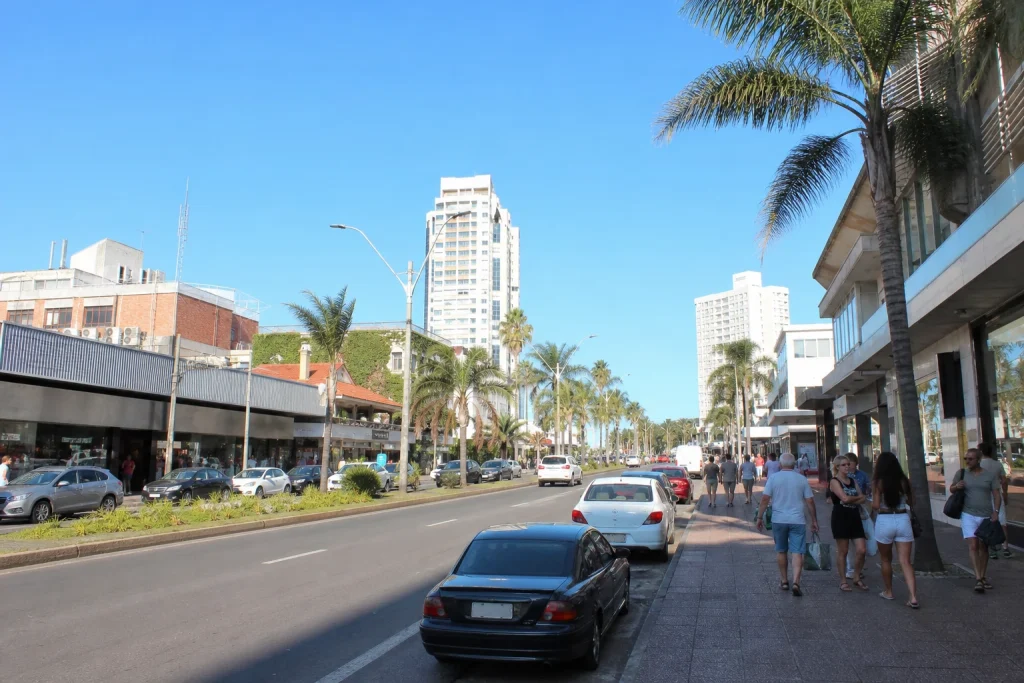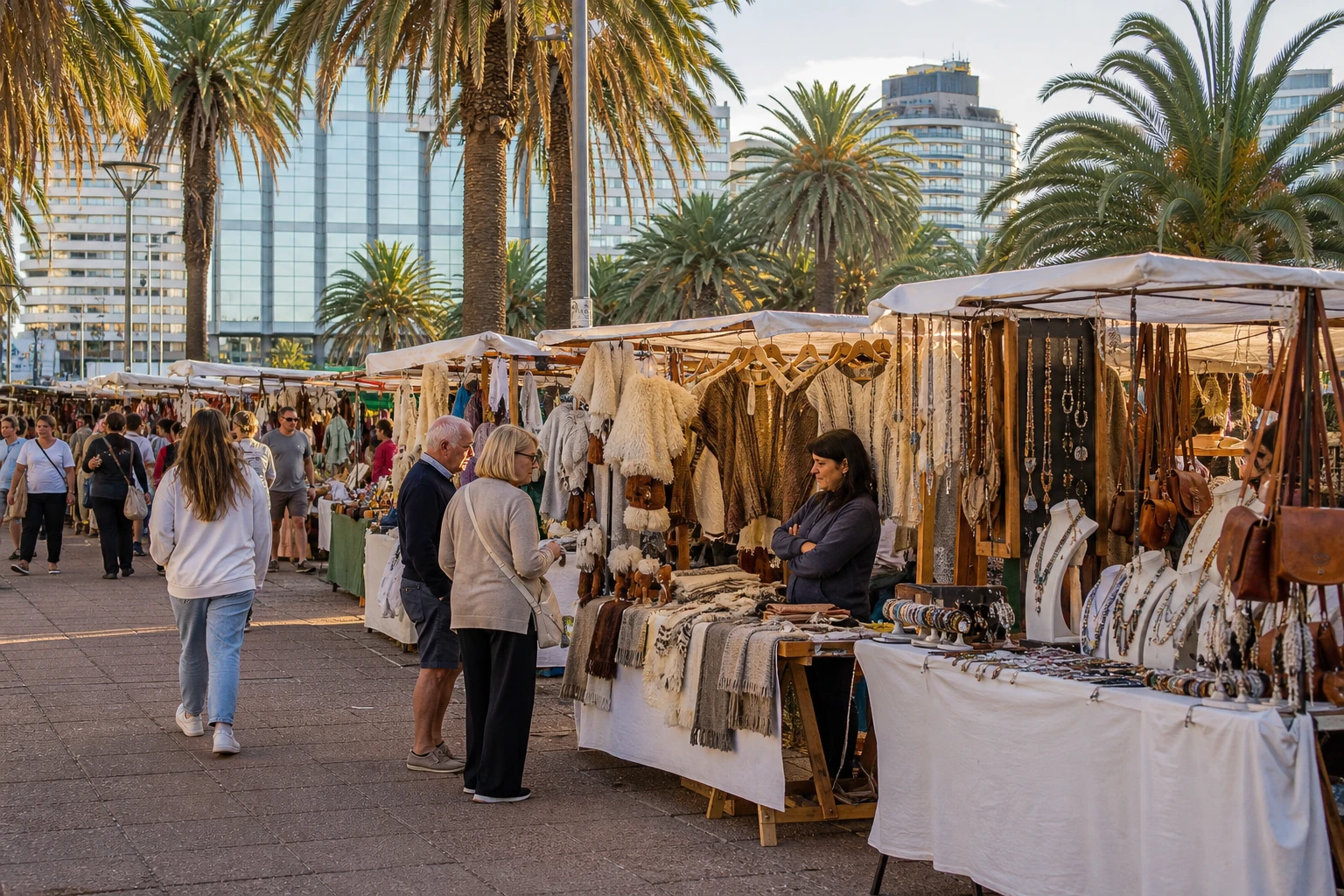
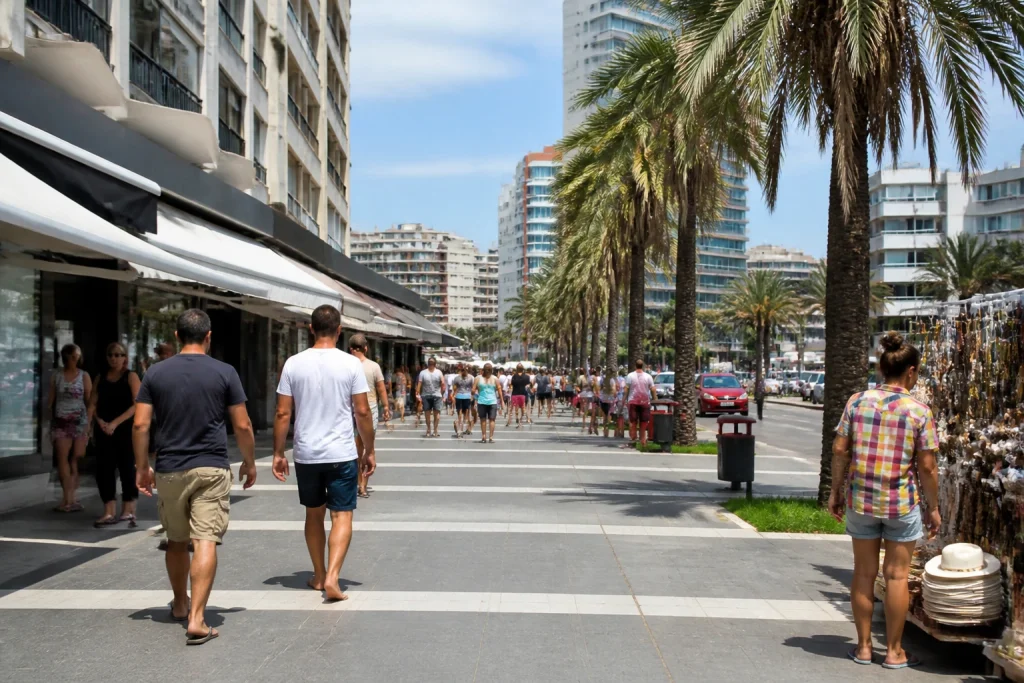
Souvenir shopping in Punta del Este begins naturally at the Feria Artesanal in Plaza Artigas. Set on Avenida Gorlero between Calles 25 and 23, the fair brings together artisans and visual artists selling goods that include wool clothing, leatherwork, and jewelry made with gold, silver, and semiprecious stones. Gorlero’s wider commercial district makes it easy to continue browsing after the market.
- Make the Feria Artesanal at Plaza Artigas your first stop for artisan-focused shopping.
- Continue along Avenida Gorlero for a broader mix of shops and places to eat.
- Choose Calle 20 for international brands and luxury browsing rather than a local-craft hunt.
- Use Punta Shopping as the indoor alternative, especially when accessibility or a wider retail mix matters.
- Check the fair’s current schedule and operating status shortly before visiting, particularly outside the December to March summer period.
The simplest strategy is to decide what kind of object you want before entering the first shop. A small keepsake calls for different browsing than a leather piece, wool garment, original artwork, or precious-metal item. Starting with a purpose helps you compare workmanship and materials without turning the afternoon into an endless circuit of display tables.

Punta del Este Classic City Tour with Sunset at Casapueblo
This tour is the best way to get to know Punta del Este in depth. If it's your first time in Punta, we recommend taking the City Classic to get a good...

Punta del Este Shore Excursion: Private Sightseeing Tour of Punta del Este
Explore the sophisticated resort town of Punta del Este on this 4-hour private shore excursion. With a private guide...

Private Tour in Punta del Este
You will live the Punta del Este experience on an exciting guided tour with personalized service where you will disc...

The Best of Punta del Este Old Town Private Walking Tour
Discover the best of Punta del Este’s historic center, from the iconic Fingers sculpture to the historic lighthous...
Plans for the Feria Artesanal deserve a same-week check. Municipal coordination reported in June 2026 referred to a new fair and changes to sales-space dimensions. That did not establish a closure, but stall positions, circulation, and the vendor mix can differ from older descriptions. Current fixed hours are also unavailable, so confirm locally before building an evening around the fair.
Where to shop for souvenirs in Punta del Este
Feria Artesanal at Plaza Artigas
Plaza Artigas is the strongest choice for a souvenir-first outing. Its Feria Artesanal occupies a central position on Avenida Gorlero, between Calles 25 and 23, and is associated with both artisans and visual artists. The documented merchandise mix includes wool garments, leatherwork, and jewelry in gold, silver, and semiprecious stones.
Treat the fair as a place to browse carefully rather than rush. Compare similar pieces, inspect joins and fastenings, and ask who made an item. If provenance matters, request specific information about the maker and materials. A market setting alone does not prove that every object is locally made or that a stone originated in Uruguay.
Avenida Gorlero for a broader shopping circuit
Avenida Gorlero is Punta del Este’s principal commercial and dining avenue, making it the logical extension of a Plaza Artigas visit. Shops beyond the fair can help with simpler gifts or general retail browsing. Travelers planning more sightseeing can connect this outing with a walking route through the Peninsula, including the lighthouse, marina, and Gorlero.
Calle 20 for luxury and international labels
Calle 20 suits shoppers interested in international brands and luxury retail. It is less targeted to artisan keepsakes, so it works best as a deliberate second stop rather than the center of a souvenir search. Visit after Plaza Artigas if your group wants both handmade objects and polished brand shopping in the same outing.
Punta Shopping for indoor convenience
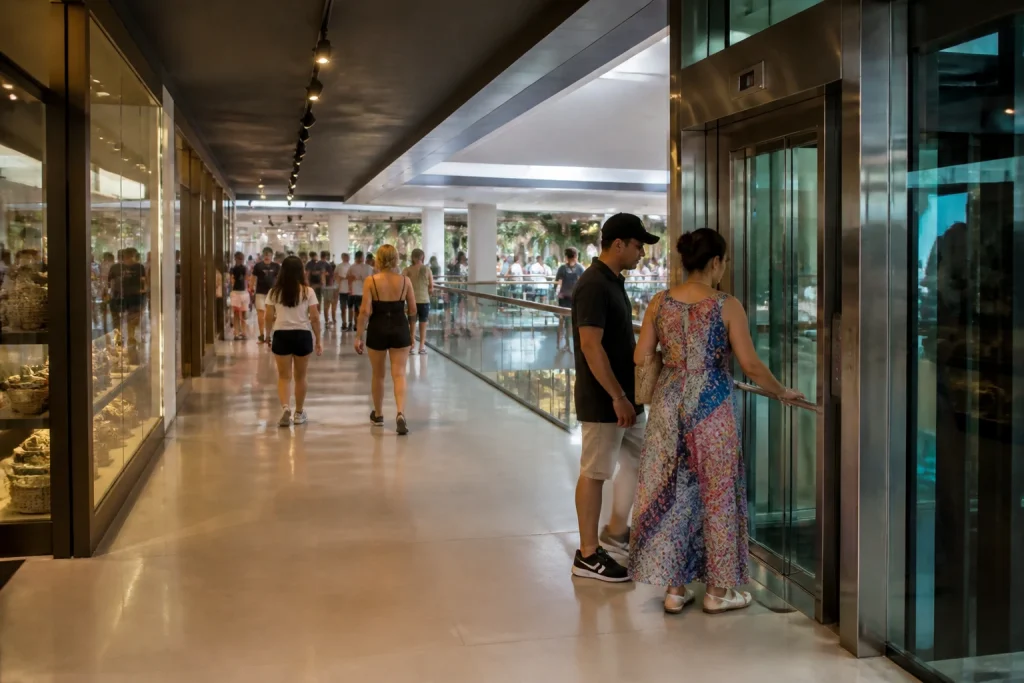
Punta Shopping offers a broad indoor combination of retail and restaurants, though it is less specifically focused on artisan souvenirs. The municipality lists it at Avenida Roosevelt and Los Alpes. It is a useful alternative when an indoor setting, elevators, accessible bathrooms, or reserved parking near the entrances would make shopping more comfortable.
What to buy at the artisan fair
The fair’s most defensible signature categories are wool clothing, leatherwork, and jewelry using gold, silver, or semiprecious stones. These categories cover several budgets and packing needs, but the better pieces can require more consideration than a small token. Ask clear questions and leave enough time to compare craftsmanship.
Wool garments
Wool clothing can be both useful and memorable. Check the garment’s material label when one is provided, examine seams, and confirm fit before paying. For gifts, knowing the recipient’s measurements is more useful than guessing by a familiar size label. Consider the space available in your luggage, especially for heavier layers.
Leatherwork
Leather pieces deserve a close look at stitching, edges, closures, and lining. Ask what material was used and how the item should be maintained. Small goods are generally easier to carry than rigid or bulky pieces, but workmanship should guide the decision. Inspect the exact object you are buying instead of relying on a display sample.
Gold, silver, and semiprecious-stone jewelry
Jewelry offers compact gifts, but material and provenance questions matter. Ask the seller to identify the metal and stone, explain who made the piece, and clarify any care instructions. Gold, silver, and semiprecious-stone work can cost more than a small souvenir, so compare pieces calmly and understand what documentation accompanies the purchase before deciding.

Montevideo’s New & Open City Private Tour
Discover the modern side of Montevideo with this 4-hour private tour, exploring the neighborhoods that developed aft...

Museo Ralli Private Guided Tour in Punta del Este
Step into a world of surrealism and sculpture at Museo Ralli, home to works by Dalí, Chagall, and Latin American ma...

Private Photo Session with a Local Photographer in Punta del Este
Want to capture your amazing honeymoon? Family vacation while the kids are still little? Your perfect couples retrea...
Artwork and visual pieces
Because the fair brings together visual artists as well as artisans, it is a sensible place to look for a piece connected to the destination. Ask whether the work is an original, a reproduction, or part of an edition. For fragile pieces, discuss protective wrapping before payment and consider how the dimensions fit your luggage.
How to choose a souvenir with confidence
A thoughtful purchase usually begins with a brief conversation. Useful questions include “¿Lo hizo usted?” for “Did you make it?” and “¿De qué material es?” for “What material is it?” You do not need a long technical discussion. A maker, material, care method, and clear price give you the basic information needed to compare objects.
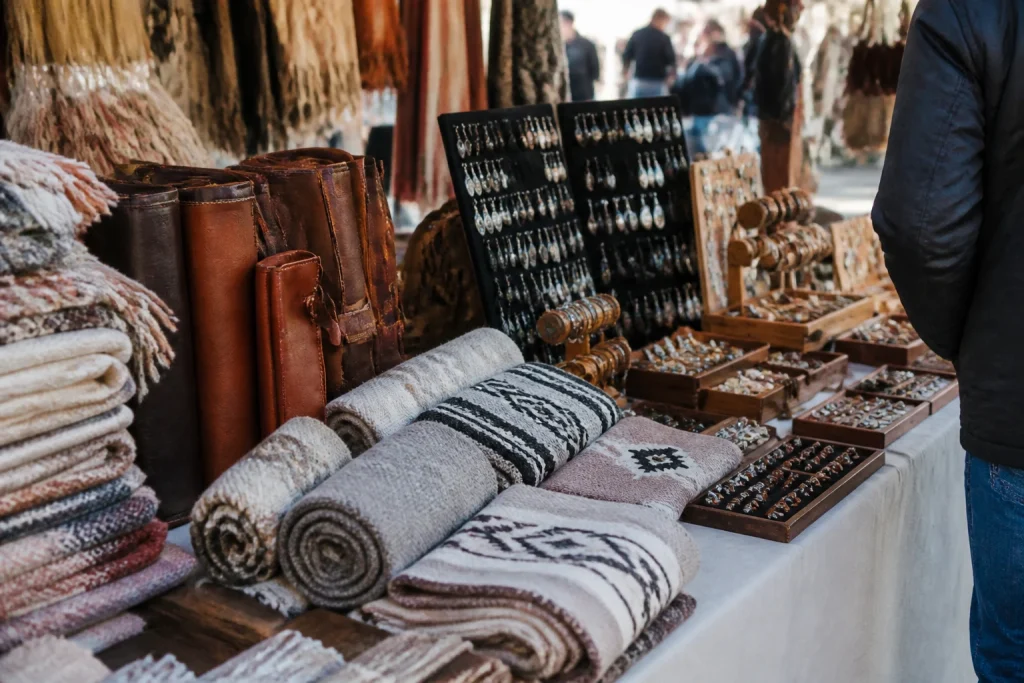
- Inspect seams, clasps, edges, surfaces, and moving parts in good light.
- Ask whether the seller made the piece and where the work was produced.
- Request specific information about metals, stones, leather, wool, and other materials.
- Confirm the total price and accepted payment method before the item is wrapped.
- Discuss protective packaging for artwork, jewelry, or anything breakable.
- Ask about exchanges before buying if fit or gift suitability is uncertain.
Punta del Este Classic City Tour with Sunset at Casapueblo
This tour is the best way to get to know Punta del Este in depth. If it's your first time in Punta, we recommend taking the City Classic to get a good...
Punta del Este Shore Excursion: Private Sightseeing Tour of Punta del Este
Explore the sophisticated resort town of Punta del Este on this 4-hour private shore excursion. With a private guide...
The Best of Punta del Este Old Town Private Walking Tour
Discover the best of Punta del Este’s historic center, from the iconic Fingers sculpture to the historic lighthous...
Choose the object whose maker, materials, and purpose you understand. The story should be clear before the souvenir goes into your suitcase.
A practical souvenir-shopping route
Begin at Plaza Artigas, then continue along Avenida Gorlero. This keeps the artisan fair and the city’s main commercial avenue within one focused outing. Add Calle 20 only if luxury or international-brand browsing fits your plans. Save Punta Shopping for a separate indoor stop or for travelers who prefer its accessibility features.
- Check the Feria Artesanal’s current operating status and schedule before leaving your accommodation.
- Start at Plaza Artigas and make an initial circuit without buying immediately.
- Return to the strongest stalls to compare materials, workmanship, and prices.
- Continue along Avenida Gorlero for general shopping or a meal.
- Add Calle 20 for luxury retail, or choose Punta Shopping for an indoor alternative.
Leave some unscheduled time around the shopping circuit. Plaza Artigas sits in the Peninsula’s central commercial area, so a purchase does not have to end the outing. A broader guide to walking the Peninsula, with its lighthouse, marina, and Gorlero, can help turn the market visit into a fuller exploration without unnecessary backtracking.
When to visit and why schedules need checking
Do not rely on a fixed online timetable for the Feria Artesanal. Operating patterns can change by season, and current municipal information does not provide set hours. Check locally shortly before visiting, especially outside the December to March summer period. This is more reliable than arranging dinner, transportation, or another activity around an older schedule.
The market’s layout also deserves a fresh check because municipal work with the artisans has addressed a new Feria Artesanal and the dimensions of sales spaces. The practical lesson is simple: confirm that the fair is operating, then allow for stalls or walkways to look different from old photographs and guides.
Season can shape the rest of a Punta del Este itinerary as much as the shopping itself. A comparison of the summer season and the off-season is useful when deciding how much flexibility to leave in your day, particularly if the artisan fair is a priority.
Still comparing Punta Del Este Souvenir Shopping?
Ask for tour ideas, hotel suggestions, or a simple trip plan that combines both.
Trip Helper
Costs, payments, and setting a sensible budget
The Feria Artesanal is listed as free to enter, so browsing does not require an admission purchase. Product prices are not dependable enough to quote as fixed ranges. Small keepsakes and substantial handmade pieces belong to different spending categories, while precious-metal jewelry, leatherwork, artwork, and semiprecious-stone pieces can require a larger budget.
Ask for the full price and accepted payment method before committing. Do not assume that every stall handles cards in the same way, and avoid planning around a tax benefit that has not been confirmed for the purchase. If an item is expensive, understand what information, packaging, and exchange terms accompany it.
| Purchase type | Useful question | Packing priority |
|---|---|---|
| Wool garment | What material and size is this? | Keep it dry and allow enough suitcase space. |
| Leatherwork | What material was used, and how is it maintained? | Protect the shape and avoid crushing it. |
| Jewelry | What are the metal and stone? | Use a secure inner pouch or case. |
| Artwork | Is this original, reproduced, or part of an edition? | Request firm, protective wrapping. |
| Small keepsake | Who made it, and where? | Check edges and fragile attachments. |
Accessibility at Plaza Artigas and Punta Shopping
Plaza de los Artesanos has ramps at its entrance points and unobstructed pedestrian passages. Municipal accessibility information also lists accessible bathrooms and food services there. These features make Plaza Artigas one of the better documented options for travelers seeking a step-free artisan-shopping stop.
Punta Shopping has ramps at every entrance, adapted elevators, accessible bathrooms, and reserved parking close to entrances. Individual vendor counters at the artisan fair are not described in the same detail, so shoppers with specific reach, turning-space, or service needs should allow flexibility once inside the market area.
Getting to the main shopping areas
Plaza Artigas is in the Peninsula’s central shopping area on Avenida Gorlero. Punta Shopping is at Avenida Roosevelt and Los Alpes. Avenida Roosevelt and Bulevar Artigas are major connections between Punta del Este and Maldonado and lead toward the resort’s principal shopping center.
Choose transportation according to your starting point and the number of purchases you expect to carry. Local bus routes, parking prices, taxi fares, and transfer times can change, so check current transport information on the day. When using a driver, naming Plaza Artigas or Punta Shopping is clearer than describing a generic souvenir market.
Packing souvenirs for the trip home
Bring a reusable tote for light purchases and reserve structured luggage space for delicate work. Keep receipts and any information supplied about materials or the maker. Jewelry belongs in a secure inner compartment, while artwork needs firm protection against bending. Avoid placing heavy objects directly against wool garments or polished leather.
Check the import rules of your destination before buying objects made with materials that can face agricultural or wildlife restrictions. Do not assume that a seller’s ability to package an item guarantees entry into another country. For a large or unusually fragile piece, decide how it will travel before completing the purchase.
Common souvenir-shopping mistakes to avoid
- Arriving with an old timetable and assuming the artisan fair will be operating at that hour.
- Treating every item at a craft market as locally made without asking about the maker.
- Buying the first jewelry or leather piece before comparing materials and finishing.
- Assuming every seller accepts the same payment methods.
- Forgetting to plan safe luggage space for artwork or breakable objects.
- Choosing Calle 20 when the real goal is locally focused artisan shopping.

Premium Tasting Viña Edén
Our vineyards sit on Pueblo Eden’s rocky mountains slopes. The mineral character of our soils and it’s oceanic i...

La Vista 360 Mirador
Don't miss the best views of Punta del Este at 'La Vista' observation deck. Access through the panoramic elevator, t...

Vacation Photographer in Punta del Este
Localgrapher is the largest network of professional photographers and videographers with more than 600 destinations...
Match each shopping stop to your goal
| Shopping goal | Best-fit area | Why it fits |
|---|---|---|
| Artisan-focused souvenirs | Feria Artesanal at Plaza Artigas | Documented categories include wool clothing, leatherwork, and jewelry. |
| General shopping and dining | Avenida Gorlero | It is the city’s principal commercial and dining avenue. |
| Luxury and international brands | Calle 20 | Its retail emphasis is better aligned with upscale and international browsing. |
| Indoor retail and restaurants | Punta Shopping | It offers a broad indoor mix and documented accessibility features. |
| Step-free artisan-market visit | Plaza Artigas | Entrance ramps and unobstructed pedestrian passages are listed. |
| Step-free shopping-center visit | Punta Shopping | Ramps, adapted elevators, accessible bathrooms, and reserved parking are listed. |
Make the purchase part of the Punta del Este story
For most souvenir hunters, the best plan is Plaza Artigas first and Avenida Gorlero second. Add Calle 20 for luxury brands or Punta Shopping for indoor convenience and stronger documented accessibility. The main limitation is scheduling uncertainty at the Feria Artesanal, so check its status shortly before setting out. Then browse slowly, ask specific questions, and choose an object that fits both your memory and your luggage.
Frequently asked questions
Where is the main artisan market in Punta del Este?
The Feria Artesanal is at Plaza Artigas on Avenida Gorlero, between Calles 25 and 23. It sits within the Peninsula’s central commercial area.
What souvenirs can I buy at the Feria Artesanal?
Documented merchandise includes wool clothing, leatherwork, and jewelry made with gold, silver, and semiprecious stones. The fair also brings together artisans and visual artists, but ask about the maker and provenance of any specific piece.
Is the Feria Artesanal free to enter?
Yes, the Feria Artesanal is listed as free to enter. Purchases are separate, and dependable current price ranges are not available for individual products.
What are the Feria Artesanal opening hours?
Current fixed hours should be checked locally shortly before visiting. This is especially important outside the December to March summer period and while changes to the fair’s layout are being coordinated.
Is Plaza Artigas accessible for wheelchair users?
Plaza de los Artesanos has entrance ramps and unobstructed pedestrian passages, along with accessible bathrooms. Accessibility at individual vendor counters is not specified.
Which Punta del Este shopping area is best for luxury brands?
Calle 20 is the better fit for international brands and luxury browsing. Plaza Artigas is more suitable when artisan souvenirs are the priority.
Does every artisan-market seller accept cards?
Ask each seller which payment methods are accepted before committing to a purchase. There is no dependable market-wide card policy to use as fixed guidance.
Can I assume every item at the market is locally made?
No, you should ask who made the item and where it was produced. Do not assume local origin or Uruguayan stone provenance unless the seller can provide specific information.