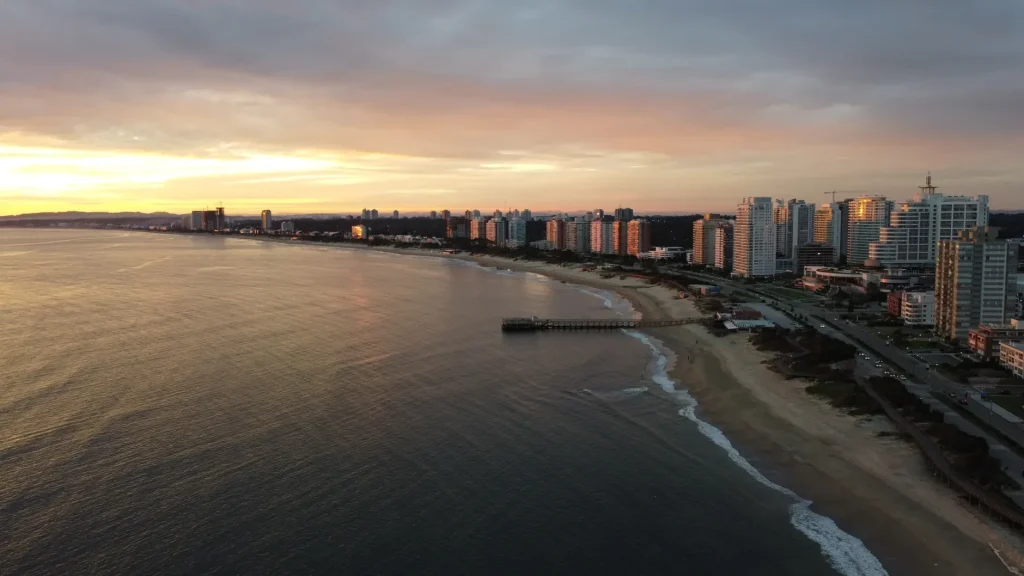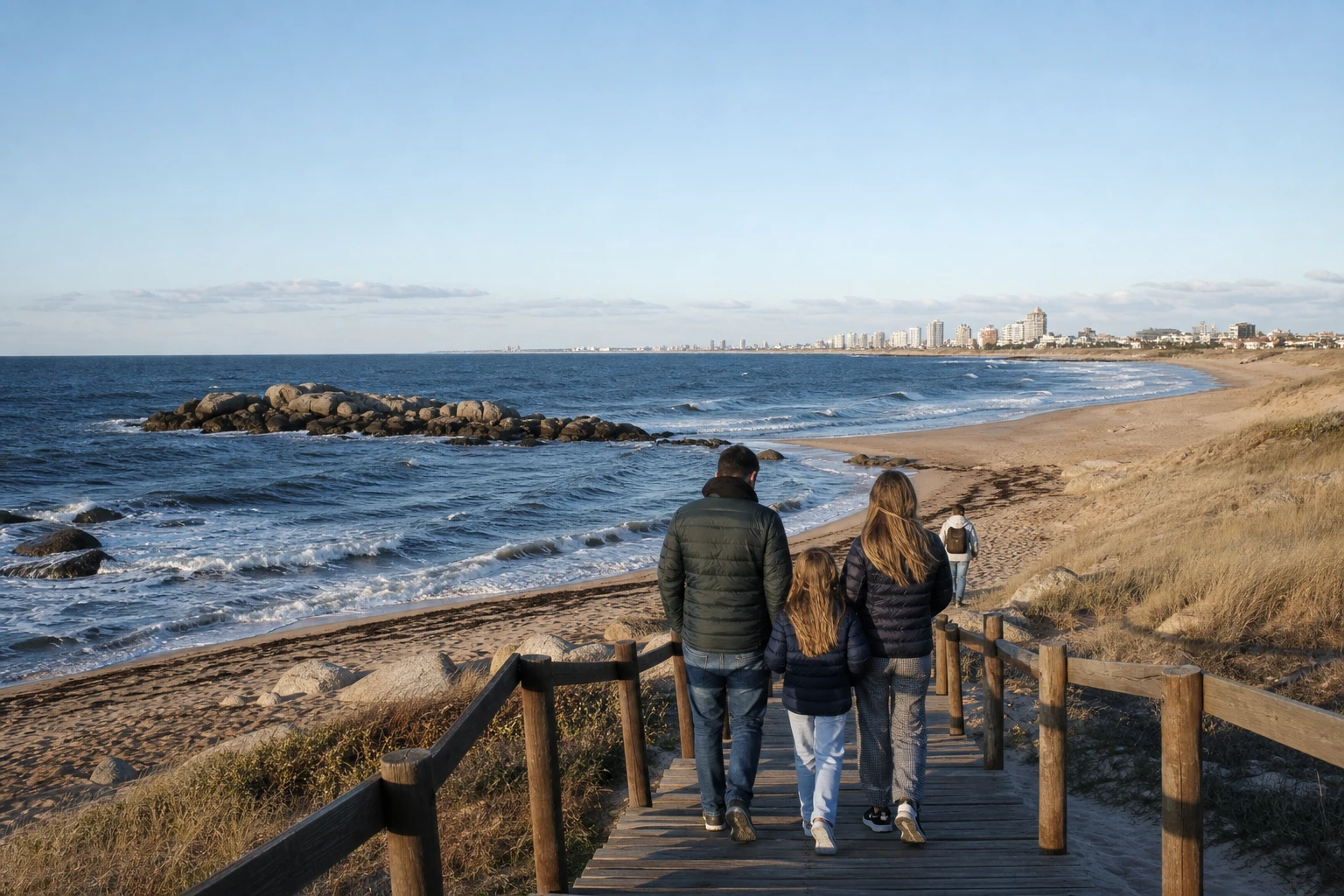
Punta del Este gives families two distinct coastal environments in one compact destination. The peninsula stands where the Río de la Plata meets the Atlantic Ocean, so a day can shift between different views, winds, and sea conditions. This three-day Punta del Este family itinerary combines a walkable first day, a weather-led beach day, and a flexible final day. It works especially well in August, when activity is lower and a slower pace feels natural.
- Use central Punta del Este as a low-logistics base for peninsula walks and short outings.
- Choose the beach each morning according to wind, sea conditions, lifeguard coverage, and each child’s swimming ability.
- In August, expect reduced seasonal activity and confirm dining, attraction, and transport schedules before setting out.
- A car is optional for a compact central stay but useful for widely spaced beaches or an outlying family excursion.
- Treat the accessible beach program at Playa Mansa as seasonal rather than guaranteed outside its announced operating period.
The schedule is deliberately flexible. Punta del Este rewards families who choose the day’s order after checking the weather rather than locking every hour into place. Keep one indoor rest period, meal, or accommodation break available each afternoon. Before visiting in the lower season, confirm operating days, transport schedules, accessible services, lifeguard coverage, and current beach conditions for your exact dates.

Punta del Este Classic City Tour with Sunset at Casapueblo
This tour is the best way to get to know Punta del Este in depth. If it's your first time in Punta, we recommend taking the City Classic to get a good...

Discover Punta del Este: Private City Tour with a Local Guide
Discover Punta del Este in comfort with a private experience designed to let you enjoy the destination at your own p...

Private Tour in Punta del Este
You will live the Punta del Este experience on an exciting guided tour with personalized service where you will disc...

Candelaria Church and Punta del Este Old Town Private Tour
Step inside a beloved seaside church, admire the 1860 lighthouse, and stand at Uruguay’s southernmost point. Disco...
A three-day Punta del Este itinerary at a glance
| Day | Main plan | Weather fallback | Best transport approach |
|---|---|---|---|
| Day 1 | Arrive, settle in, and explore the peninsula on foot | Shorten the waterfront portion and add a long meal or accommodation break | Walk in the central area; use a taxi or remise for luggage |
| Day 2 | Choose a family beach after checking wind and sea conditions | Use a short shoreline visit without swimming, followed by an unhurried lunch | Walk, take a local bus, or use a taxi according to the selected beach |
| Day 3 | Repeat the family favorite or take a farther outing | Return to the peninsula for a low-logistics day | Consider a rental car, taxi, or remise for widely spaced stops |
Families staying longer can repeat Day 2 under different conditions or divide Day 3 into a short beach session and a second peninsula walk. Families with only two full days can combine the first-day walk with a brief shoreline stop, then reserve the second day for the best weather window.
Make these checks before planning each day
- Check the day’s wind and sea conditions before selecting a beach.
- Confirm lifeguard coverage rather than assuming summer services continue year-round.
- Review opening days and hours for any restaurant, attraction, or organized activity.
- Check the route, fare zone, payment method, and return schedule before using local buses.
- Arrange mobility support or specialized beach equipment in advance if anyone in the family requires it.
August falls in Punta del Este’s low season, which the Maldonado tourism authority describes as winter’s period of least activity. Beaches and public spaces can feel less pressured, but the tradeoff is a smaller seasonal dining and attraction offer. The guide to the summer season and the quieter off-season can help families understand how the destination’s rhythm changes across the year.
Do not let a disappointing forecast erase the entire day. A windy morning can still support a short look at the shore, followed by a sheltered meal and a compact walk later. The goal is to preserve the day’s main experience without forcing young children through long exposure to uncomfortable conditions.
Day 1: Settle in and walk the peninsula
Morning: Arrive without overloading the schedule
Keep arrival day simple. Check in, organize layers and beach gear, and let everyone eat before beginning the main walk. Central Punta del Este supports a low-logistics sightseeing block on foot, but that does not mean the entire destination is comfortably walkable with children. Save distant stops for another day and turn back before younger travelers run out of energy.
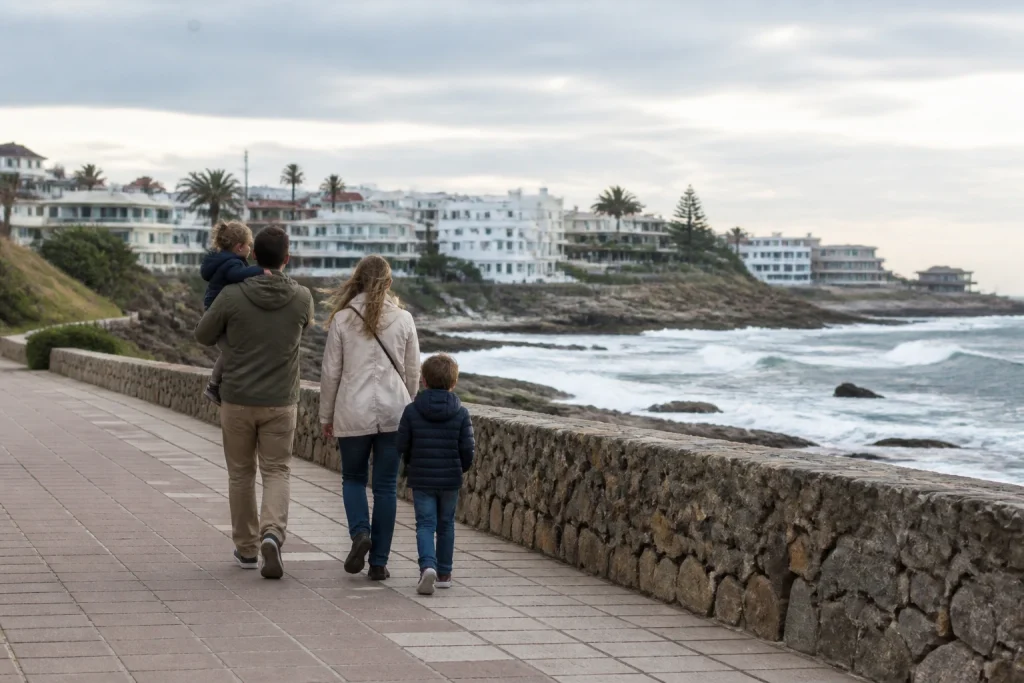
Maldonado is about 130 kilometers from Montevideo and is served by airport, port, bus, taxi, and remise connections. Families arriving with luggage can use a taxi or remise for the final transfer, then switch to walking once settled in the central area. If a child seat is needed, arrange it in advance rather than assuming every vehicle carries one.
Midday: Turn the official walking route into a family game
The municipal tourism authority publishes a walking-tour guide for Punta del Este, making the peninsula a practical first sightseeing block. Adults can follow the broader route while children look for boats, changing water views, or a chosen photo subject. Our guide to walking the peninsula around the lighthouse, marina, and Gorlero gives that central circuit a clearer shape when those stops suit your family.
Break the route into short sections instead of treating it as a march. Pause for a drink, snack, restroom stop, or warm-up whenever the group needs one. A stroller can help on longer sections, but families should still evaluate surfaces and entrances as they encounter them. No single walking route needs to be completed to make the day worthwhile.

The Best of Punta del Este Old Town Private Walking Tour
Discover the best of Punta del Este’s historic center, from the iconic Fingers sculpture to the historic lighthous...

Museo del Mar Private Guided Tour in Punta del Este
Discover Punta del Este’s most curious gem! From whale skeletons to vintage beach tales and South America’s larg...
Candelaria Church and Punta del Este Old Town Private Tour
Step inside a beloved seaside church, admire the 1860 lighthouse, and stand at Uruguay’s southernmost point. Disco...
Late afternoon: Compare the two coastal moods
Use the end of the walk to observe how conditions differ around the peninsula. Punta del Este occupies the meeting point of river and ocean, but no beach should be treated as automatically suitable for every child. Wind, waves, water conditions, and swimming confidence matter more than a fixed label. On exposed days, enjoying the view without entering the water is still a complete coastal experience.
Finish near your accommodation or an easy ride back. Arrival day is not the moment for a complicated return involving several connections. An early meal and organized bag for the next morning will make the beach decision much easier.
Day 2: Let weather and water choose the beach
There is no permanent winner in the family debate between Playa Brava and Playa Mansa. Use the day’s actual conditions and your children’s abilities to decide. The detailed Playa Brava versus Playa Mansa comparison is useful for understanding the choice, but wind, sea state, lifeguard coverage, and comfort should make the final call each morning.
Morning: Use a five-point beach test
- Can every child manage the observed water conditions confidently?
- Is the wind comfortable enough for a sustained visit?
- Is lifeguard coverage operating at the selected location and time?
- Can the family reach a restroom, meal, or return ride without a difficult detour?
- Does the group have enough warm, dry clothing for after the shoreline session?
A beach day does not have to mean hours in the water. In the lower season, plan a compact first session and extend it only if everyone remains warm and comfortable. Younger children may be just as content collecting visual clues, drawing the coastline, or watching wave patterns from a safe distance.
Keep the shoreline session easy to stop
- Choose a clear meeting point before children spread out.
- Keep dry layers, drinking water, and snacks together in one accessible bag.
- Set conservative boundaries according to the day’s sea conditions.
- Pause before anyone becomes cold or overtired.
- Leave enough energy for the return trip and a relaxed meal.
Potable tap water is available in Uruguay, so reusable bottles are practical when your accommodation has a convenient place to fill them. Carry enough for the outing anyway, particularly when seasonal businesses are operating on reduced schedules. Pack wet items separately so the family can switch plans without returning immediately to the hotel.
Plan carefully for accessible beach services
Punta del Este’s accessible beach service is based at Parada 8 on Playa Mansa. Announced features include ramps, specialized beach matting, accessible restroom facilities, and amphibious chairs for people with disabilities and older adults. The latest municipal notice for 2026 states that the staffed service ended on March 7 after a seasonal extension, so it should not be treated as available during an August visit without new confirmation.
Travelers using mobility equipment should confirm the current service period, staffing, equipment arrangements, and transport before building the day around this location. Accessibility also varies among hotels, restaurants, vehicles, and individual attractions. Discuss the specific features your family needs rather than relying on a general accessibility label.
Afternoon: Warm up, eat, and reassess
After the beach, return to the center for lunch or a rest. Families can use the guide to Uruguayan coastal food, including chivito, parrilla, seafood, and wine, to understand local menu themes. Confirm the restaurant’s current opening hours in winter and check that the menu has something workable for younger or selective eaters.
If the weather improves, end with another short waterfront look rather than attempting a second full beach session. If conditions worsen, protect the rest period. Children often remember a day of manageable discoveries more fondly than a packed schedule completed in the cold.
Still comparing Punta Del Este Family Itinerary?
Ask for tour ideas, hotel suggestions, or a simple trip plan that combines both.
Trip Helper
Day 3: Repeat a favorite or take a farther outing
Make the third day responsive to what worked. Some families will want more beach time, while others will prefer a longer meal, another peninsula walk, or an outlying excursion. Taxis, remises, or a rental car become more useful when several stops are spread beyond the compact central area.
Option A: Repeat the better beach experience
Repeating a beach is not wasted itinerary space. Familiar access, restrooms, meeting points, and transport reduce friction, especially with toddlers. Recheck the conditions because yesterday’s comfortable choice is not automatically today’s best choice. If the opposite coast looks more suitable, switch without feeling tied to the original plan.
Option B: Build one simple excursion beyond the core
Choose one main destination rather than joining several distant stops into a long circuit. Confirm that the intended place is operating, reserve any required entry or activity, and identify the return plan before leaving. A car offers flexibility for gear and rest stops, while a taxi or remise avoids parking and navigation. Costs and availability vary, so compare the complete family total.
Option C: Keep the day central and child-led
A second peninsula day can be slower than the first. Let each child choose one short activity, leave space for lunch, and revisit the waterfront only when conditions are comfortable. Since the core supports sightseeing on foot, this option also works well when adults want to avoid another day of loading bags into vehicles.
Families with different energy levels can divide briefly. One adult can take older children on an extended walk while another returns with a toddler, provided everyone agrees on a clear meeting place and time. This keeps a single tired traveler from ending the day for the entire group.
Getting to Punta del Este and moving around with children
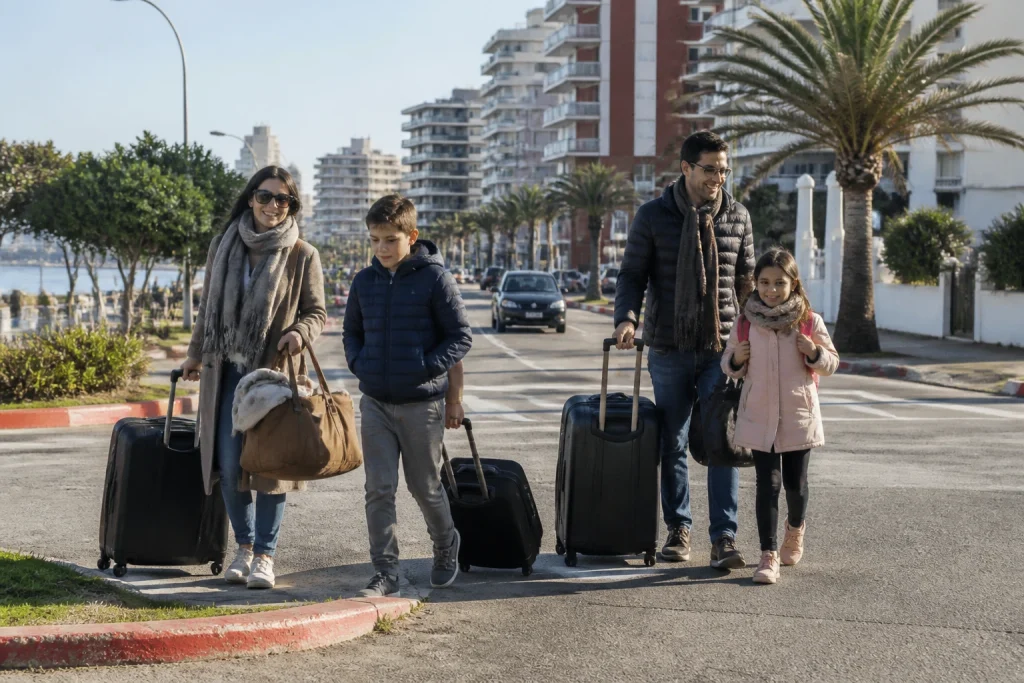
Punta del Este can support a car-free central stay, but a vehicle becomes more useful as the itinerary spreads outward. Maldonado is about 130 kilometers from Montevideo and has airport, port, bus, taxi, and remise services. Choose transport according to luggage, child ages, mobility needs, weather, and the number of daily stops rather than treating one mode as best for the entire trip.
| Transport | Best use for families | Planning point |
|---|---|---|
| Walking | Peninsula sightseeing and short central trips | Keep routes compact and allow frequent breaks |
| Local bus | Point-to-point travel when the route and fare zone are clear | Check payment, transfers, schedules, and the return route locally |
| Taxi or remise | Luggage, poor weather, mobility needs, and direct family transfers | Arrange child-seat needs before travel |
| Rental car | Widely spaced beaches or a flexible outlying day | Include parking, fuel, and child-seat needs in the decision |
Use current bus fares only as a budget baseline
COPSA Línea Este lists a fare of UYU 466 one way and UYU 932 round trip between Montevideo and Punta del Este, effective January 7, 2026 until further notice. Terminal boarding charges are additional. Confirm the current fare, timetable, luggage policy, terminal charge, and seat arrangements immediately before traveling.
For local travel, the 2026 fare page lists a UYU 39 local ticket and common longer-zone fares of UYU 62, 79, and 101. Transfers of up to two buses are available within specified time limits, but the applicable zone, route, transfer window, and payment method need to be checked locally. A direct taxi can be simpler when several bus fares, a stroller, and beach bags are involved.
Families arriving by air should use the schedule and transfer instructions supplied with their booking. Allow a comfortable buffer around arrival and departure days, particularly when operating schedules are reduced. Avoid attaching a distant excursion to the same day as a flight or long intercity journey.

Mirador panorámico La Vista 360
Don't miss the best views of Punta del Este at 'La Vista' observation deck. Access through the panoramic elevator, t...
Punta del Este Classic City Tour with Sunset at Casapueblo
This tour is the best way to get to know Punta del Este in depth. If it's your first time in Punta, we recommend tak...
The Best of Punta del Este Old Town Private Walking Tour
Discover the best of Punta del Este’s historic center, from the iconic Fingers sculpture to the historic lighthous...
Where to stay for a lower-logistics family trip
A central base is the easiest choice for families prioritizing peninsula walks and short rides. It can reduce repeated packing, vehicle use, and decisions about where to park. The site’s overview of where to stay in Punta del Este can help compare central accommodation with locations better suited to families planning more distant beach days.
- Ask about heating and a practical place to dry damp clothing for an August stay.
- Check sleeping layouts, cot availability, lift access, and room location before booking.
- Look for a refrigerator or simple food-preparation facilities if children need familiar snacks.
- Measure the actual route to meals and transport rather than relying on a broad neighborhood label.
- Confirm step-free entrances, bathroom layout, and doorway clearance when mobility access is essential.
No general citywide accessibility description can replace property-specific details. Families using wheelchairs, walkers, or large strollers should confirm the entire route, including the entrance, lift, room, bathroom, dining area, and vehicle pickup point. Keep the first day compact so any unexpected access issue can be solved without disrupting a major excursion.
Planning around Punta del Este’s winter rhythm
August is part of Punta del Este’s lower-activity winter period. That can make an unhurried family schedule easier, but it also means summer assumptions are risky. A restaurant, attraction, beach service, or transport connection that operates frequently during peak season may follow a reduced pattern. Confirm the few places essential to your plan, then leave the rest flexible.
Punta del Este Classic City Tour with Sunset at Casapueblo
This tour is the best way to get to know Punta del Este in depth. If it's your first time in Punta, we recommend taking the City Classic to get a good...
Candelaria Church and Punta del Este Old Town Private Tour
Step inside a beloved seaside church, admire the 1860 lighthouse, and stand at Uruguay’s southernmost point. Disco...
Discover Punta del Este: Private City Tour with a Local Guide
Discover Punta del Este in comfort with a private experience designed to let you enjoy the destination at your own p...
The Best of Punta del Este Old Town Private Walking Tour
Discover the best of Punta del Este’s historic center, from the iconic Fingers sculpture to the historic lighthous...
For a family trip, flexibility is not empty time. It is the space that lets good weather, rested children, and a comfortable beach line up on the same day.
Check conditions twice: once while arranging the following day and again before leaving in the morning. If the sea or wind is unsuitable, move the beach block rather than forcing it. If a seasonal venue is closed, return to the compact peninsula plan. This approach keeps one change from unraveling the full itinerary.
Family budget notes without false precision
| Expense | Useful planning figure or method | What to confirm |
|---|---|---|
| Montevideo intercity bus | UYU 466 one way or UYU 932 round trip as a 2026 baseline | Current fare, terminal charge, schedule, and luggage policy |
| Local bus | UYU 39 local; common longer-zone fares listed at UYU 62, 79, and 101 | Route, zone, payment method, transfer rules, and child fares |
| Taxi, remise, or rental car | Compare the complete family cost for the planned route | Child seats, luggage space, parking, pickup, and cancellation terms |
| Meals and seasonal activities | Set a daily family allowance rather than assuming a fixed resort price | Opening days, current menu or admission price, and reservation needs |
Uruguay uses the Uruguayan peso, although some establishments accept foreign currencies. Do not assume acceptance or a particular exchange method; confirm payment options with your accommodation and important vendors. Keeping a small transport and snack buffer also protects the day when the family changes routes.

The cheapest fare is not always the lowest-friction choice. Add every family member, terminal charge, transfer, luggage need, and final ride before comparing buses with a direct vehicle. For local outings, a taxi can become reasonable when it replaces multiple fares and prevents a long wait with wet beach gear.
What to pack for a family day
- Layered clothing and a wind-resistant outer layer
- Dry socks and a change of clothes for each child
- Reusable water bottles and compact snacks
- Sun protection for exposed coastal time, even on a cool day
- A separate bag for damp clothing and towels
- Any required medicines, mobility accessories, and charging equipment
- A suitable adapter for 220 V electricity and European-style plugs
Keep the day bag small enough for the adults to carry comfortably. A single organized bag is easier to move between a bus, taxi, restaurant, and beach than several loose totes. Store documents, medicine, and electronics in an inner water-resistant pouch.
Potable water simplifies bottle refills, while the 220 V electrical system and European-style plugs deserve attention before departure. Charge phones before longer outings because they may be needed for transport coordination, operating updates, and weather checks.
Adjusting the itinerary for different ages
Toddlers and preschoolers
Limit each outing to one main objective and keep a return ride available. A short peninsula section, snack, and shoreline look can fill the morning. Choose accommodation where a midday rest does not require a long transfer. Repeat familiar places when that reduces stress.
School-age children
Give each child a planning role. One can check the wind, another can carry the shared water, and another can choose a photography theme for the peninsula walk. Clear jobs turn necessary logistics into part of the trip and make waiting periods easier to manage.
Teenagers
Let teenagers help choose between a repeat beach session, a longer walk, or the outlying day. Give them a defined amount of independent time only when the setting, maturity level, and meeting arrangements make that appropriate. Build in a substantial meal and avoid filling every hour.
A flexible daily rhythm that avoids rushed transitions
- Morning: Check conditions and confirm the day’s essential opening or transport detail.
- Late morning: Complete the main walk, beach session, or excursion while energy is strongest.
- Midday: Eat and reassess rather than automatically continuing the original plan.
- Afternoon: Add one compact activity or return for a rest.
- Evening: Keep dinner close to the accommodation when the day involved a longer outing.
This rhythm avoids publishing exact clock times that will not fit every season, child, or transport arrangement. The essential principle is to protect the main experience and make everything after lunch optional. Families visiting during busier periods can use the same structure but should allow more time for reservations and movement.
The best Punta del Este family plan stays responsive
Punta del Este suits families who enjoy coastal scenery, manageable walking blocks, and days that can change with the weather. Its main planning challenge is seasonality. Services and operating patterns are more limited in winter, while beach conditions demand a fresh decision each day. Base yourself centrally, protect one good weather window for the shore, and use direct transport when a longer route would exhaust the group.
Start by confirming accommodation, arrival transport, and the few activities your family considers essential. Leave the exact beach and the third day open until local conditions are clear. That balance creates a trip with structure, breathing room, and fewer unnecessary battles with wind, schedules, or tired legs.
Frequently asked questions
How many days does a family need in Punta del Este?
Three full days provide a practical introduction for most families. Use one day for the peninsula, one for a weather-led beach visit, and one to repeat a favorite or take an outlying excursion. A two-day trip can combine the arrival walk with a brief shoreline stop.
Do families need a car in Punta del Este?
A car is not essential for a compact stay in central Punta del Este. The peninsula supports a useful sightseeing block on foot, while taxis, remises, or a rental car become more convenient for widely spaced beaches and outlying excursions.
Is Playa Mansa or Playa Brava better for children?
The better beach is the one suited to the day’s conditions and each child’s swimming confidence. Check wind, sea state, weather, and lifeguard coverage before choosing rather than assuming one beach is always appropriate for families.
Is August a good time for a Punta del Este family trip?
August can suit families who prefer a lower-activity visit and flexible coastal walks. It is winter and has less tourism activity than summer, so confirm operating days, transport schedules, lifeguard coverage, and seasonal services before finalizing each day.
How much is the bus between Montevideo and Punta del Este?
The listed 2026 baseline is UYU 466 one way or UYU 932 round trip, before terminal boarding charges. Confirm the current fare, schedule, luggage policy, and terminal charge immediately before travel because these details can change.
Does Punta del Este have an accessible beach service?
Punta del Este has a seasonal accessible beach service at Parada 8 on Playa Mansa. Its announced features include ramps, beach matting, accessible restrooms, and amphibious chairs, but the latest 2026 municipal notice states that the service ended on March 7. Confirm any new operating period before planning an August visit around it.
What currency and electrical system does Punta del Este use?
Punta del Este uses the Uruguayan peso and Uruguay operates on 220 V electricity with European-style plugs. Some businesses accept foreign currencies, but families should confirm payment options instead of assuming acceptance.
Experiences to explore
 Explore experience ↗
Jose Ignacio Beach from Punta del Este
◷ 4 hr
Discover José Ignacio and its quiet beaches. Located 40 km from Punta del Este, José Ignacio is a beautiful town known as an oasis of p
See dates for Current pricing
View dates Explore experience ↗
Piriapolis Beach from Colonia del Sacramento or Montevideo
◷ 4 hr
Beautiful opportunity to get to know Piriapolis on this city tour through the city enjoying the most important and beautiful and mystic
See dates for Current pricing
View dates Explore experience ↗
Visit MACA Atchugarry Meseum & Casapueblo.Private Transport
◷ 4 hr
Discover the artistic soul of Punta del Este on this private half-day tour, combining two of Uruguay's most iconic cultural landmarks.
See dates for Current pricing
View dates