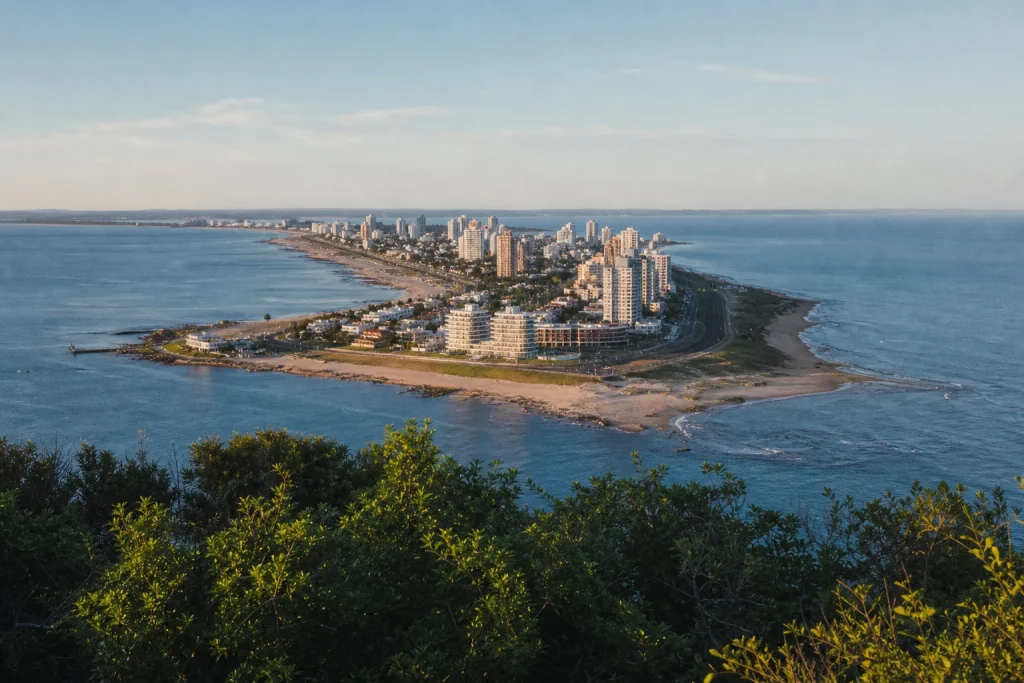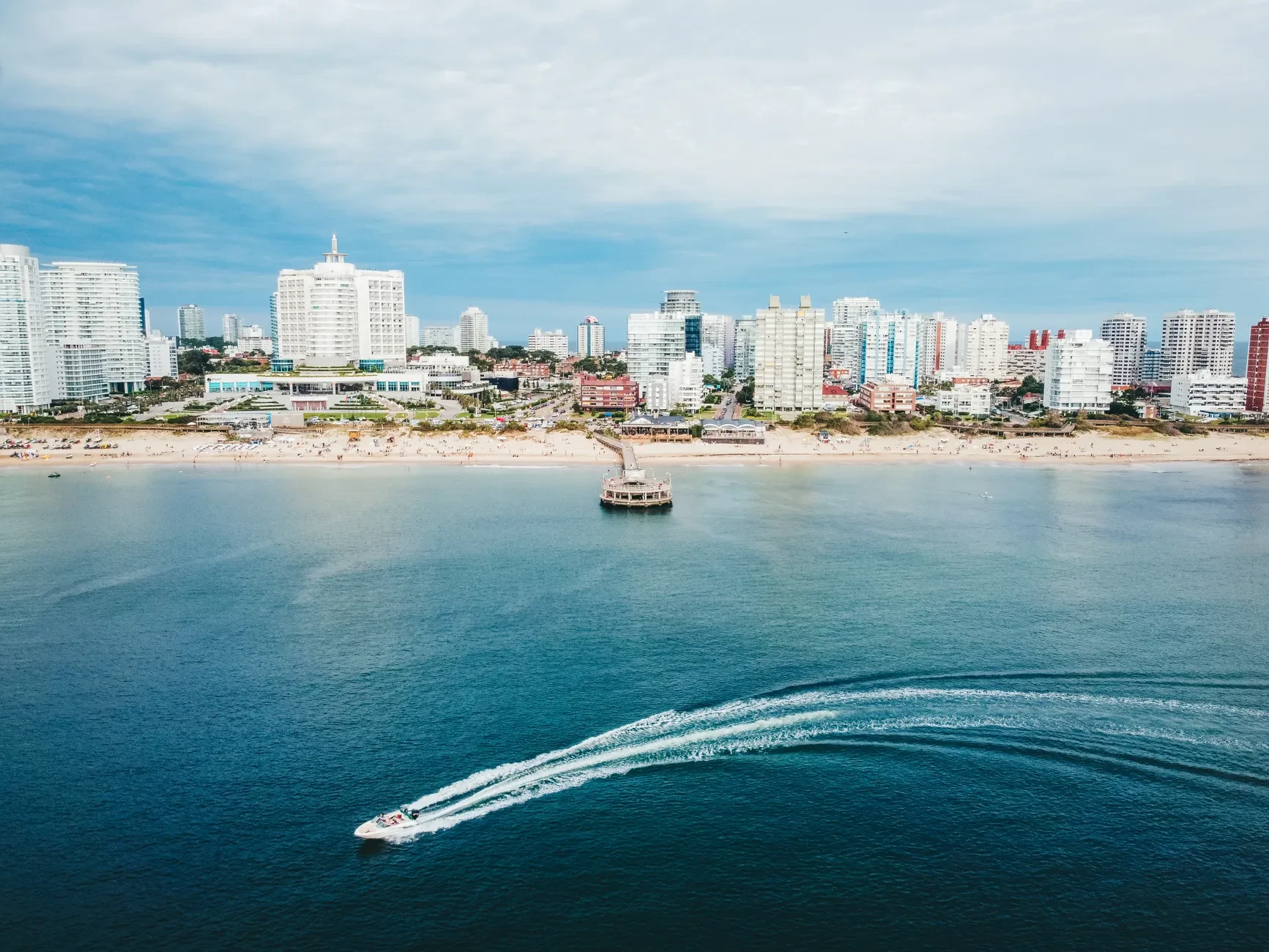
Punta del Este is best approached as a chain of coastal bases rather than one compact neighbourhood. The Península forms the central core between the destination’s two signature beaches, Playa Mansa and Playa Brava. Westward, the resort stretches toward Punta Ballena; eastward, it continues through La Barra toward José Ignacio. Choosing a base shapes your beach access, evening plans and daily transport more than any single hotel feature.
How Punta del Este’s coastal bases fit together
“Neighbourhoods” is useful travel shorthand here, but the labels cover different kinds of places. The Península is the compact central town. Mansa and Brava are beach-facing zones on either side of it. Punta Ballena, La Barra and José Ignacio work better as distinct coastal bases, each with a different relationship to the centre. Manantiales is also worth comparing as its own accommodation search area.

Private Have It Your Way Tour in Punta Del Este
Be prepared for an exclusive trip through Punta del Este with a true local! We will share our knowledge in an engaging and entertaining way, and invi...

Jewish History Punta del Este Old Town Private Walking Tour
Uncover Punta del Este’s Jewish heritage as you explore synagogues, cultural landmarks, and hidden gems. Stroll th...

Punta del Este Shore Excursion: Private Sightseeing Tour of Punta del Este
Explore the sophisticated resort town of Punta del Este on this 4-hour private shore excursion. With a private guide...

Wine Lovers - Bodega Garzon Experience
Get ready to be wowed by Bodega Garzon, which has been named the Best Winery in the Southern Hemisphere! We at The W...
- Choose the Península for a first stay built around walking, dining and access to both beach sides.
- Choose Playa Mansa for a more sheltered beach position.
- Choose Playa Brava for an open-ocean, surf-facing setting.
- Choose Punta Ballena for scenery and a base set apart from the central core.
- Choose La Barra for beach clubs, dining, design shopping and nightlife, with road transport in mind.
- Choose José Ignacio for a lower-rise, more secluded stay; assess Manantiales property by property when comparing east-side lodging.
Punta del Este area comparison at a glance
| Base or zone | Best suited to | What to weigh |
|---|---|---|
| Península | First visits and car-free stays | Central density, January noise and parking pressure. |
| Playa Mansa | A more sheltered beach position | Conditions still vary, so follow beach flags. |
| Playa Brava | An open-ocean, surf-facing setting | It is more exposed than Mansa. |
| Punta Ballena | Scenery and a removed western base | It is outside the walkable central core. |
| La Barra | Dining, design shopping, beach clubs and nightlife | Road transport, peak-season traffic and crowding. |
| Manantiales | Comparing individual coastal lodging options | Use the property’s exact location and your plans, not only the broad area label. |
| José Ignacio | A lower-rise, seclusion-focused escape | Distance from the centre, peak-season traffic and seasonal openings. |
Stay on the Península for the most walkable central base
The Península is the strongest practical choice for first-time visitors and travellers who do not want a car to run every errand. It is the compact original town, bringing the port, Gorlero Avenue, restaurants and both the Mansa and Brava sides within walking distance. It works especially well for a short break when you want beach time, meals and an evening stroll to fit into the same day.
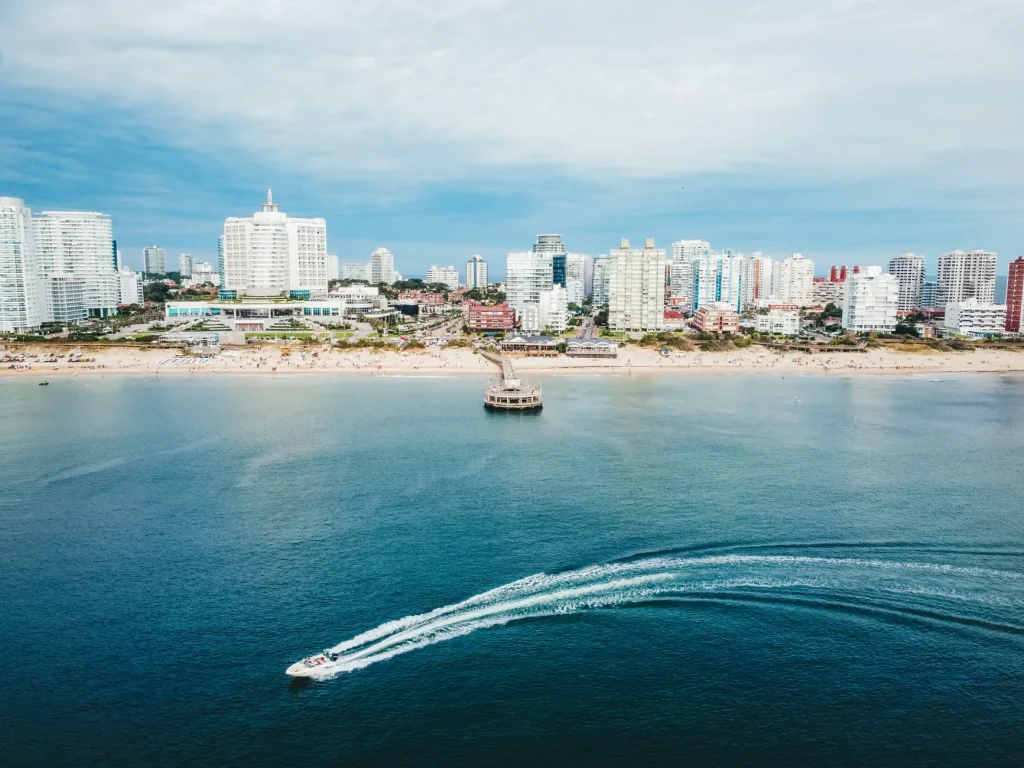
The trade-off is concentration. The central area can feel denser in January, with parking pressure and the potential for more street noise than outer coastal bases. Select your specific accommodation with its immediate setting in mind. A walking route through the Península lighthouse, marina and Gorlero corridor is a useful way to get oriented after arrival.
Playa Mansa: the more sheltered side
Playa Mansa is one of Punta del Este’s two principal beaches, positioned at the meeting of the Río de la Plata and the Atlantic. It is the more sheltered side of the resort, making it the logical first look for travellers who place a premium on that more protected beach position. Staying nearby also keeps you close to the central amenities of the Península.
Sheltered does not mean conditions are identical every day. Wind, surf and weather still shape a beach day, so follow lifeguard flags and check official local notices shortly before heading out. A Mansa address makes sense for visitors who want a beach-led stay without giving up easy access to the central core.
Playa Brava: an Atlantic-facing beach setting
Playa Brava is the open-ocean, surf-facing counterpart to Mansa. Choose this side for its more exposed Atlantic setting and the energy of an ocean beach, while planning around the day’s conditions rather than assuming swimming will suit every visit. A dedicated Playa Brava versus Playa Mansa beach-day comparison can help narrow the choice once you know what kind of shore time you want.
Look beyond the centre for scenery, sociability or seclusion
Still comparing Food Tours?
Ask for tour ideas, hotel suggestions, or a simple trip plan that combines both.
Trip Helper
Punta Ballena: a westward base for scenery
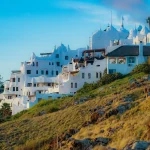
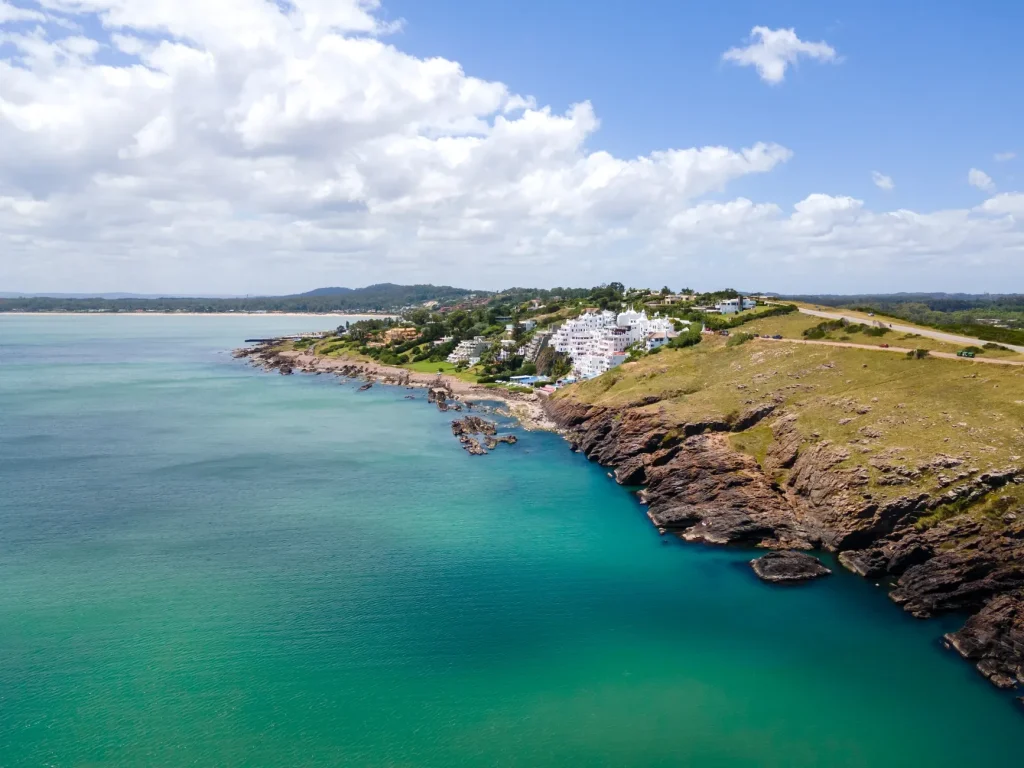
Punta Ballena lies in the resort’s westward coastal spread and suits travellers who want scenery and a more removed base than the central Península. Treat it as a deliberate location choice rather than an extension of the walkable centre. Compare the exact accommodation address with the meals, beaches and outings you want to include. The Casapueblo at sunset guide is a useful companion if that landmark is on your itinerary.
La Barra: evenings, dining and a livelier east-side base
La Barra is the east-of-centre choice for travellers drawn to beach clubs, restaurants, design shopping and nightlife. It has a more social, outward-looking rhythm than a stay focused on the Península, but its location also makes road transport a larger part of the plan. In peak summer, traffic and crowding are meaningful considerations when choosing dinner times and moving between areas.
La Barra fits a visitor who wants evenings to be part of the destination’s appeal, not an afterthought. For a focused night out, the La Barra after-sunset guide to galleries, the Wavy Bridge and late dinners offers a useful next step. Build in extra patience for travel during the busiest summer dates instead of scheduling back-to-back reservations across the coast.
Manantiales: compare the individual property, not just the label
Manantiales belongs in an east-side accommodation comparison, but it is best evaluated property by property. Before booking, use the exact address to judge how it fits your preferred beach, dining plans and tolerance for daily transfers. This simple check avoids treating a broad coastal label as though every stay offers the same access or atmosphere.
José Ignacio: lower-rise and more removed from the centre
José Ignacio is the choice for travellers who value a lower-rise setting, seclusion and distance from central Punta del Este’s bustle. It is a luxury-oriented, more remote coastal base, so it works best when your priority is the immediate area rather than frequent trips back to the Península. A slow coastal day in José Ignacio is a natural way to approach the pace of a stay here.
Its limitations are practical rather than mysterious: peak-season traffic and higher prices can affect the experience, while many seasonal businesses may close outside summer. Do not rely on a fixed journey time from central Punta del Este, since routes, departure points and summer traffic change the calculation. Confirm individual restaurant and hotel opening dates before building a stay around them.
Plan transport before choosing an outer coastal base
The Península is the easiest base for a car-free stay because central sights, restaurants, the port and both principal beach sides are close together. La Barra and José Ignacio require more attention to road transport, and Punta Ballena should be chosen for its separate setting rather than central convenience. If you expect to move between bases for dinners or beach clubs, leave breathing room in the schedule.
In the busiest summer period, central Punta del Este and La Barra can bring traffic, crowding and parking pressure. That makes a central stay particularly useful for visitors planning to spend most of their time in the Península, Mansa and Brava. It also makes a less hurried itinerary a better companion to an outer-coast hotel.
Montevideo bus-fare reference
For a current planning reference, COPSA Línea Este lists Montevideo–Punta del Este at UYU 466 one way or UYU 932 return, and Montevideo–José Ignacio at UYU 579 one way or UYU 1,158 return. These fares were effective from January 7, 2026 until further notice, and terminal boarding charges are not included. Recheck the operator’s fare page before booking, as prices can be revised.
Accessibility needs require property-specific checks
Do not assume that a central address, beachfront location or transport route guarantees step-free access. Confirm accessibility arrangements directly with your accommodation, transport operator and any municipal beach service relevant to your dates and needs. This matters especially when a trip depends on a particular beach entrance, vehicle type or route between coastal bases.
Use season to balance atmosphere, availability and costs
December through March is Punta del Este’s busiest stretch, and demand is especially intense around New Year. Summer brings the fullest social and hospitality scene, but also heavier traffic, more crowding and greater pressure on parking and accommodation. Book early if your trip falls in late December or January, especially if the Península, La Barra or José Ignacio is your preferred base.
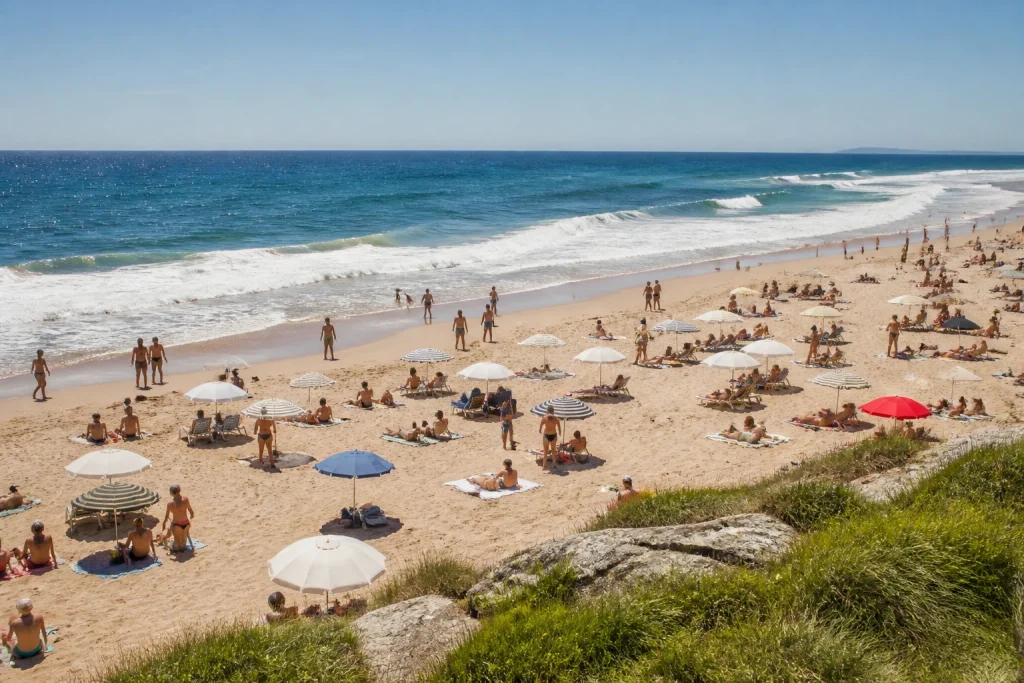
Outside peak summer, the eastern resort areas can feel markedly less active, and parts of La Barra and José Ignacio have seasonal closures. That can suit travellers looking for fewer crowds, but it narrows dining and activity choices. Accommodation costs can rise sharply in peak season, so compare dated rates across several bases before deciding that one area is automatically better value.
A Punta del Este summer season versus off-season planning guide is useful when your dates are flexible. The best timing depends on the kind of trip you want: a full calendar of dining and nightlife, or a more pared-back coastal stay with fewer seasonal businesses open.
Choose your Punta del Este base by the trip you want
- For a first visit without a car: stay on the Península.
- For a more sheltered beach position near the core: look at Playa Mansa.
- For an exposed Atlantic beach setting: look at Playa Brava.
- For scenic separation west of the centre: consider Punta Ballena.
- For late dinners, beach clubs and a social east-side base: choose La Barra.
- For a lower-rise, seclusion-led coastal escape: choose José Ignacio, and compare Manantiales addresses carefully.
For most first-time visitors, the Península offers the clearest, simplest introduction to Punta del Este. Move outward when the beach character, scenery or evening atmosphere is the reason for the trip. The key limitation is distance: this resort spreads along the coast, so a beautiful base can still be inconvenient for plans centred elsewhere. Pick the area that best matches your daily rhythm, then reserve your preferred dates early for summer.
Frequently asked questions
Are Punta del Este’s coastal areas all formal city neighbourhoods?
No. “Punta del Este neighbourhoods” is a practical travel label covering the central Península, beach zones such as Mansa and Brava, and distinct coastal bases including Punta Ballena, La Barra and José Ignacio.
Which area is best for a first-time visit to Punta del Este?
The Península is the best default for a first-time visit, especially without a car. Its compact core puts the port, Gorlero Avenue, restaurants and both principal beach sides within walking distance.
Should I stay by Playa Mansa or Playa Brava?
Choose Playa Mansa for a more sheltered beach position and Playa Brava for an open-ocean, surf-facing setting. Beach conditions vary, so follow lifeguard flags on the day.
Can I visit Punta del Este without a car?
Yes, the Península is well suited to a car-free stay because its main central sights, dining and the Mansa and Brava beach sides are close together. La Barra, Punta Ballena and José Ignacio need more transport planning.
When is Punta del Este busiest?
Punta del Este is busiest from December through March, with especially intense demand around New Year. Parts of La Barra and José Ignacio can have more seasonal closures outside summer.
What should I check before booking in La Barra or José Ignacio?
Check the accommodation’s exact location, your likely daily transport and the operating dates of any restaurants or venues central to your plans. Peak-season traffic and seasonal closures can affect the experience in these eastern coastal bases.
The Península is Punta del Este’s most compact central base, between Playa Mansa and Playa Brava by Pedro Slinger, Pexels.
Experiences to explore
 Explore experience ↗
Jose Ignacio Beach from Punta del Este
◷ 4 hr
Discover José Ignacio and its quiet beaches. Located 40 km from Punta del Este, José Ignacio is a beautiful town known as an oasis of p
See dates for Current pricing
View dates Explore experience ↗
Half Day Tour in Punta del Este and Jose Ignacio
◷ 5 hr
Discover the enchanting beauty of José Ignacio and its peaceful beaches on this unique tour. On this tour, we will get to know the sere
See dates for Current pricing
View dates Explore experience ↗
Visit Garzon Winery and Jose Ignacio. Private Driver.
◷ 6 hr
This private experience combines the very best of Uruguay’s wine country with the charm and sophistication of José Ignacio. The experie
See dates for Current pricing
View dates